AI Agent for Chemical Industry: Automate Process Control, Safety Management & R&D Optimization
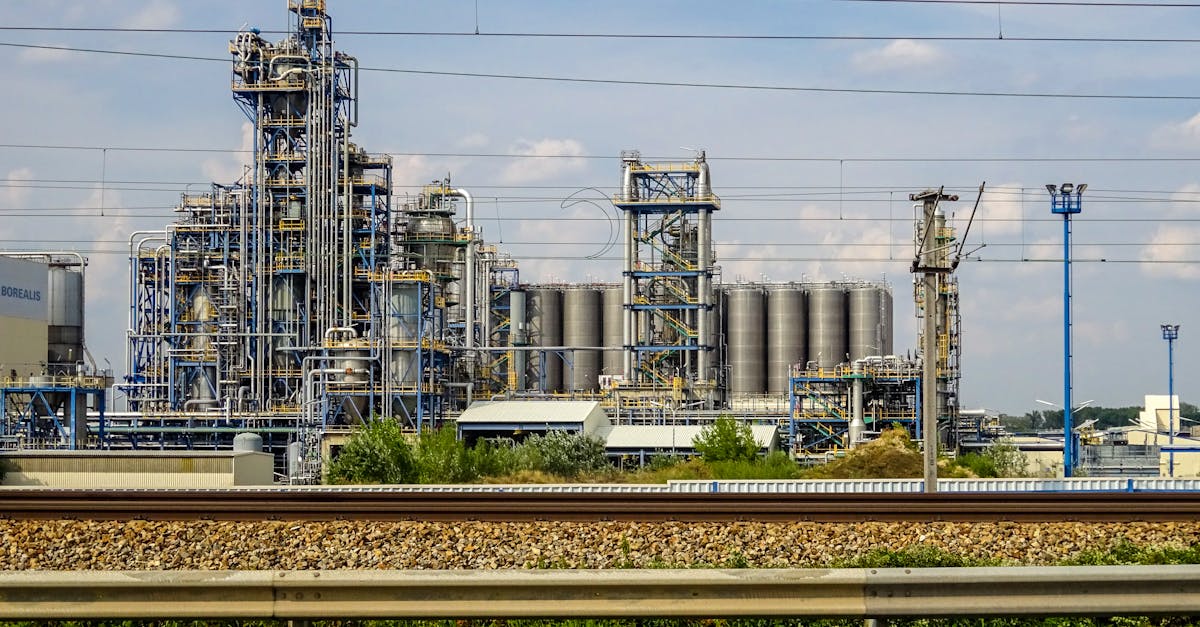
Photo by Nikolai Kolosov on Pexels
The chemical industry operates at the intersection of extreme precision and extreme risk. Reactor temperatures deviate by a few degrees and you lose an entire batch worth hundreds of thousands of dollars. A missed HAZOP scenario leads to a catastrophic incident. A formulation takes 18 months in R&D when it could take 6.
AI agents are uniquely suited to chemical manufacturing because they can integrate across the entire value chain: reading sensor data in real time, cross-referencing safety databases, optimizing formulations through thousands of virtual experiments, and monitoring regulatory compliance across multiple jurisdictions simultaneously. Unlike static dashboards or simple rule-based alarms, AI agents reason about multi-variable chemical processes and take corrective action autonomously.
This guide covers six high-impact areas where AI agents deliver measurable ROI in the chemical industry, with production-ready Python code for each. Whether you run a specialty chemicals plant, a petrochemical complex, or a fine chemicals operation, these patterns apply directly to your operations.
Table of Contents
1. Advanced Process Control
Chemical processes are inherently multi-variable: temperature, pressure, flow rate, concentration, pH, and residence time all interact in nonlinear ways. Traditional PID controllers handle single loops well but struggle with coupled variables. Model Predictive Control (MPC) powered by AI agents can optimize across all variables simultaneously, anticipating disturbances before they propagate through the process.
Reactor Temperature, Pressure & Flow Optimization
An AI agent running MPC for a continuous stirred-tank reactor (CSTR) doesn't just maintain setpoints. It predicts how a feed composition change will affect temperature 15 minutes from now and pre-adjusts the cooling water valve. It balances yield maximization against catalyst deactivation rate. It knows that pushing pressure up by 0.5 bar increases conversion by 2% but reduces membrane lifetime by 10%.
Distillation Column Optimization
Distillation consumes 40-60% of energy in a typical chemical plant. An AI agent optimizes reflux ratio and reboiler duty in real time based on feed composition variability, product purity targets, and energy cost (which varies by time of day). The savings compound: a 3% energy reduction on a column running 8,000 hours per year translates to hundreds of thousands in annual savings.
Batch Process Optimization & Recipe Scheduling
Batch operations in specialty chemicals require precise sequencing of additions, temperature ramps, hold times, and transitions. An AI agent learns from historical batch data which parameter trajectories produce the highest yields and shortest cycle times, then dynamically adjusts the recipe for each batch based on current raw material properties.
import numpy as np
from scipy.optimize import minimize
from dataclasses import dataclass

@dataclass
class ReactorState:
    temperature: float      # Kelvin
    pressure: float         # bar
    flow_rate: float        # m3/h
    concentration: float    # mol/L
    catalyst_activity: float  # 0-1 normalized

class ChemicalProcessMPC:
    """Model Predictive Control agent for chemical reactor optimization."""

    def __init__(self, prediction_horizon: int = 20, control_horizon: int = 5):
        self.prediction_horizon = prediction_horizon
        self.control_horizon = control_horizon
        self.dt = 60  # 1-minute intervals
        self.history = []

    def reactor_model(self, state: ReactorState, controls: dict) -> ReactorState:
        """First-principles + data-driven hybrid reactor model."""
        T, P, F, C, alpha = (
            state.temperature, state.pressure,
            state.flow_rate, state.concentration, state.catalyst_activity
        )
        cooling_duty = controls["cooling_water_valve"]  # 0-100%
        feed_rate = controls["feed_rate"]               # m3/h

        # Arrhenius kinetics: k = A * exp(-Ea/RT)
        k = 2.4e8 * np.exp(-72000 / (8.314 * T)) * alpha
        reaction_rate = k * C ** 1.5

        # Energy balance
        heat_of_reaction = -145000  # J/mol (exothermic)
        heat_generated = reaction_rate * heat_of_reaction * 0.5  # reactor volume
        heat_removed = cooling_duty / 100 * 850 * (T - 298)
        dT = (heat_generated - heat_removed) / (4200 * 1200) * self.dt

        # Mass balance
        dC = (feed_rate * (2.5 - C) / 0.5 - reaction_rate) * self.dt / 3600

        # Catalyst deactivation (sintering model)
        deactivation_rate = 1.2e-6 * np.exp(0.008 * (T - 450))
        d_alpha = -deactivation_rate * self.dt

        # Pressure dynamics
        dP = 0.01 * (feed_rate - F) - 0.005 * (P - 15)

        return ReactorState(
            temperature=T + dT,
            pressure=max(1, P + dP),
            flow_rate=feed_rate,
            concentration=max(0, C + dC),
            catalyst_activity=max(0.1, alpha + d_alpha)
        )

    def objective(self, control_sequence: np.ndarray, current_state: ReactorState,
                  targets: dict) -> float:
        """Multi-objective: maximize yield, minimize energy, preserve catalyst."""
        n_controls = 2  # cooling_valve, feed_rate
        controls_reshaped = control_sequence.reshape(self.control_horizon, n_controls)
        state = current_state
        total_cost = 0

        for step in range(self.prediction_horizon):
            ctrl_idx = min(step, self.control_horizon - 1)
            controls = {
                "cooling_water_valve": controls_reshaped[ctrl_idx, 0],
                "feed_rate": controls_reshaped[ctrl_idx, 1]
            }
            state = self.reactor_model(state, controls)

            # Yield maximization (conversion)
            conversion = 1 - state.concentration / 2.5
            yield_cost = -50 * conversion

            # Temperature constraint (soft penalty)
            temp_penalty = 100 * max(0, state.temperature - targets["max_temp"]) ** 2
            temp_penalty += 100 * max(0, targets["min_temp"] - state.temperature) ** 2

            # Pressure constraint
            press_penalty = 80 * max(0, state.pressure - targets["max_pressure"]) ** 2

            # Energy cost (cooling duty)
            energy_cost = 0.15 * controls["cooling_water_valve"]

            # Catalyst preservation bonus
            catalyst_bonus = -20 * state.catalyst_activity

            total_cost += yield_cost + temp_penalty + press_penalty + energy_cost + catalyst_bonus

        return total_cost

    def optimize(self, current_state: ReactorState, targets: dict) -> dict:
        """Solve MPC optimization and return optimal control actions."""
        n_controls = 2
        x0 = np.array([50, 1.2] * self.control_horizon)
        bounds = [(10, 95), (0.5, 3.0)] * self.control_horizon

        result = minimize(
            self.objective, x0, args=(current_state, targets),
            method="SLSQP", bounds=bounds,
            options={"maxiter": 200, "ftol": 1e-8}
        )

        optimal_controls = result.x.reshape(self.control_horizon, n_controls)
        return {
            "cooling_water_valve": round(optimal_controls[0, 0], 1),
            "feed_rate": round(optimal_controls[0, 1], 3),
            "predicted_conversion": self._predict_conversion(current_state, result.x),
            "optimization_status": "optimal" if result.success else "suboptimal",
            "cost_value": round(result.fun, 2)
        }

    def _predict_conversion(self, state, controls_flat):
        controls_reshaped = controls_flat.reshape(self.control_horizon, 2)
        for step in range(min(5, self.prediction_horizon)):
            ctrl_idx = min(step, self.control_horizon - 1)
            controls = {
                "cooling_water_valve": controls_reshaped[ctrl_idx, 0],
                "feed_rate": controls_reshaped[ctrl_idx, 1]
            }
            state = self.reactor_model(state, controls)
        return round(1 - state.concentration / 2.5, 4)


# Usage: real-time optimization loop
mpc = ChemicalProcessMPC(prediction_horizon=20, control_horizon=5)
current = ReactorState(temperature=463, pressure=15.2, flow_rate=1.5,
                       concentration=0.85, catalyst_activity=0.92)

targets = {"max_temp": 475, "min_temp": 440, "max_pressure": 18}
action = mpc.optimize(current, targets)
print(f"Optimal cooling valve: {action['cooling_water_valve']}%")
print(f"Optimal feed rate: {action['feed_rate']} m3/h")
print(f"Predicted conversion: {action['predicted_conversion'] * 100:.1f}%")
2. Safety & HAZOP Intelligence
Chemical plant safety is non-negotiable, and yet HAZOP studies remain one of the most labor-intensive activities in the industry. A single HAZOP review for a medium-complexity process unit takes 40-80 person-hours. AI agents can accelerate this dramatically by automating deviation identification, cause-consequence mapping, and cross-referencing incident databases to surface scenarios that human teams might miss.
Automated HAZOP Analysis
A traditional HAZOP team applies guide words (NO, MORE, LESS, REVERSE, etc.) to each process parameter at each node. An AI agent does this systematically across every node in the P&ID, generating an exhaustive list of deviations, then uses knowledge graphs of chemical process incidents to rank them by likelihood and severity. It doesn't replace the HAZOP team but generates a comprehensive first draft that the team reviews and refines, cutting study time by 60%.
Safety Instrumented System (SIS) Demand Rate Prediction
SIS demand rate directly determines the required Safety Integrity Level (SIL). An AI agent analyzes historical process data to predict when safety systems are most likely to be challenged, enabling proactive maintenance scheduling and better SIL verification. It correlates demand events with upstream process conditions, weather, shift changes, and equipment age.
Process Safety Incident Pattern Recognition
Most chemical incidents follow recognizable patterns: simultaneous equipment degradation, procedure deviations during startup/shutdown, and organizational factors like understaffing during holidays. An AI agent continuously monitors for these compound patterns, providing early warning weeks before an incident would occur.
PSM/RMP Compliance Monitoring
OSHA's Process Safety Management (PSM) standard and EPA's Risk Management Program (RMP) require continuous documentation and adherence to 14 and 11 elements respectively. An AI agent tracks compliance status across all elements, identifies gaps before audits, and generates documentation automatically from plant data.
from dataclasses import dataclass, field
from enum import Enum
from typing import Optional
import json

class Severity(Enum):
    CATASTROPHIC = 5
    MAJOR = 4
    MODERATE = 3
    MINOR = 2
    NEGLIGIBLE = 1

class Likelihood(Enum):
    FREQUENT = 5
    PROBABLE = 4
    OCCASIONAL = 3
    REMOTE = 2
    IMPROBABLE = 1

@dataclass
class HAZOPDeviation:
    node: str
    parameter: str
    guide_word: str
    deviation: str
    causes: list[str]
    consequences: list[str]
    severity: Severity
    likelihood: Likelihood
    safeguards: list[str]
    recommendations: list[str]
    risk_score: int = 0

    def __post_init__(self):
        self.risk_score = self.severity.value * self.likelihood.value

@dataclass
class SISEvent:
    timestamp: str
    system_id: str
    demand_type: str  # "spurious" or "genuine"
    process_conditions: dict
    response_time_ms: float
    successful: bool

class ChemicalSafetyAgent:
    """AI agent for HAZOP analysis, SIS monitoring, and PSM compliance."""

    GUIDE_WORDS = ["NO", "MORE", "LESS", "REVERSE", "PART OF",
                   "AS WELL AS", "OTHER THAN", "EARLY", "LATE"]
    PARAMETERS = ["flow", "temperature", "pressure", "level",
                   "composition", "pH", "viscosity", "reaction"]

    def __init__(self):
        self.deviations: list[HAZOPDeviation] = []
        self.sis_events: list[SISEvent] = []
        self.incident_patterns = self._load_incident_knowledge_base()

    def _load_incident_knowledge_base(self) -> dict:
        """Chemical incident pattern database from CSB investigations."""
        return {
            "runaway_reaction": {
                "precursors": ["cooling_failure", "feed_ratio_deviation",
                               "catalyst_overcharge", "agitator_failure"],
                "indicators": ["temperature_rise_rate > 2C/min",
                               "pressure_rise_rate > 0.5bar/min"],
                "historical_frequency": 0.003  # per reactor-year
            },
            "toxic_release": {
                "precursors": ["seal_degradation", "corrosion_thinning",
                               "overpressure", "mechanical_impact"],
                "indicators": ["h2s_detector > 10ppm", "fence_line_monitor_alert"],
                "historical_frequency": 0.008
            },
            "dust_explosion": {
                "precursors": ["dust_accumulation", "ignition_source",
                               "containment_breach", "inerting_failure"],
                "indicators": ["dust_concentration > 25%_LEL",
                               "oxygen_level > 8%_in_inerted_vessel"],
                "historical_frequency": 0.001
            }
        }

    def automated_hazop(self, process_nodes: list[dict]) -> list[HAZOPDeviation]:
        """Generate comprehensive HAZOP deviations for all process nodes."""
        all_deviations = []

        for node in process_nodes:
            node_id = node["id"]
            node_type = node["type"]  # reactor, column, heat_exchanger, etc.
            operating_params = node["parameters"]

            for param in self.PARAMETERS:
                if param not in operating_params:
                    continue

                for guide_word in self.GUIDE_WORDS:
                    deviation = self._analyze_deviation(
                        node_id, node_type, param, guide_word, operating_params
                    )
                    if deviation and deviation.risk_score >= 6:
                        all_deviations.append(deviation)

        # Cross-reference with incident database
        enriched = self._enrich_with_incident_data(all_deviations)
        self.deviations = sorted(enriched, key=lambda d: d.risk_score, reverse=True)
        return self.deviations

    def _analyze_deviation(self, node_id, node_type, param,
                           guide_word, params) -> Optional[HAZOPDeviation]:
        """Analyze a single deviation using process knowledge rules."""
        deviation_rules = {
            ("reactor", "temperature", "MORE"): {
                "causes": ["cooling water failure", "exothermic runaway",
                           "feed ratio imbalance", "catalyst overcharge"],
                "consequences": ["thermal runaway", "product degradation",
                                 "vessel overpressure", "catalyst sintering"],
                "severity": Severity.CATASTROPHIC,
                "likelihood": Likelihood.OCCASIONAL,
                "safeguards": ["high-temp alarm", "emergency cooling",
                               "SIS trip on high-high temperature",
                               "relief valve sized for runaway"]
            },
            ("reactor", "pressure", "MORE"): {
                "causes": ["blocked outlet", "runaway reaction",
                           "non-condensable accumulation", "over-feed"],
                "consequences": ["vessel rupture", "toxic release",
                                 "fire/explosion", "environmental release"],
                "severity": Severity.CATASTROPHIC,
                "likelihood": Likelihood.REMOTE,
                "safeguards": ["pressure relief valve", "SIS high-pressure trip",
                               "bursting disc", "pressure alarm"]
            },
            ("reactor", "flow", "NO"): {
                "causes": ["pump failure", "valve closed in error",
                           "line blockage", "loss of utilities"],
                "consequences": ["batch loss", "reactant accumulation",
                                 "delayed reaction hazard"],
                "severity": Severity.MAJOR,
                "likelihood": Likelihood.OCCASIONAL,
                "safeguards": ["low-flow alarm", "pump standby",
                               "SIS on loss of feed"]
            },
            ("column", "temperature", "MORE"): {
                "causes": ["reboiler fouling", "excess steam",
                           "feed composition change", "reflux loss"],
                "consequences": ["off-spec product", "column flooding",
                                 "thermal decomposition", "energy waste"],
                "severity": Severity.MODERATE,
                "likelihood": Likelihood.PROBABLE,
                "safeguards": ["temperature alarm", "steam flow control",
                               "composition analyzer"]
            },
            ("heat_exchanger", "flow", "LESS"): {
                "causes": ["fouling", "control valve malfunction",
                           "utility supply reduction"],
                "consequences": ["inadequate cooling/heating",
                                 "process temperature deviation",
                                 "downstream quality impact"],
                "severity": Severity.MODERATE,
                "likelihood": Likelihood.PROBABLE,
                "safeguards": ["flow indicator", "differential pressure monitor",
                               "redundant utility supply"]
            }
        }

        key = (node_type, param, guide_word)
        if key not in deviation_rules:
            return None

        rule = deviation_rules[key]
        return HAZOPDeviation(
            node=node_id, parameter=param, guide_word=guide_word,
            deviation=f"{guide_word} {param} in {node_id}",
            causes=rule["causes"], consequences=rule["consequences"],
            severity=rule["severity"], likelihood=rule["likelihood"],
            safeguards=rule["safeguards"],
            recommendations=[f"Verify {sg} functionality" for sg in rule["safeguards"]]
        )

    def _enrich_with_incident_data(self, deviations):
        """Cross-reference deviations with historical incident patterns."""
        for dev in deviations:
            for pattern_name, pattern in self.incident_patterns.items():
                cause_overlap = set(dev.causes) & set(pattern["precursors"])
                if cause_overlap:
                    dev.recommendations.append(
                        f"Review {pattern_name} scenario (CSB database match: "
                        f"{len(cause_overlap)} common precursors)"
                    )
        return deviations

    def predict_sis_demand_rate(self, sis_events: list[SISEvent],
                                process_data: dict) -> dict:
        """Predict SIS demand rate from historical events and process conditions."""
        genuine_demands = [e for e in sis_events if e.demand_type == "genuine"]
        spurious_trips = [e for e in sis_events if e.demand_type == "spurious"]
        operating_hours = process_data.get("operating_hours", 8760)

        demand_rate = len(genuine_demands) / (operating_hours / 8760) if operating_hours else 0
        spurious_rate = len(spurious_trips) / (operating_hours / 8760) if operating_hours else 0

        # SIL determination based on demand rate and consequence severity
        if demand_rate < 0.01:
            required_sil = "SIL 1"
            pfd_target = 0.1
        elif demand_rate < 0.1:
            required_sil = "SIL 2"
            pfd_target = 0.01
        elif demand_rate < 1.0:
            required_sil = "SIL 3"
            pfd_target = 0.001
        else:
            required_sil = "SIL 4"
            pfd_target = 0.0001

        return {
            "demand_rate_per_year": round(demand_rate, 4),
            "spurious_trip_rate": round(spurious_rate, 4),
            "required_sil": required_sil,
            "pfd_target": pfd_target,
            "avg_response_time_ms": round(
                np.mean([e.response_time_ms for e in genuine_demands]), 1
            ) if genuine_demands else 0,
            "recommendation": self._sis_recommendation(demand_rate, spurious_rate)
        }

    def _sis_recommendation(self, demand_rate, spurious_rate):
        if spurious_rate > 2 * demand_rate:
            return "High spurious trip rate. Review sensor calibration and voting logic."
        if demand_rate > 0.5:
            return "High demand rate. Review process design to reduce SIS challenges."
        return "SIS performance within acceptable limits."


# Usage
agent = ChemicalSafetyAgent()
nodes = [
    {"id": "R-101", "type": "reactor",
     "parameters": {"temperature": 463, "pressure": 15, "flow": 1.5}},
    {"id": "T-201", "type": "column",
     "parameters": {"temperature": 378, "pressure": 1.2, "flow": 5.0}},
    {"id": "E-301", "type": "heat_exchanger",
     "parameters": {"temperature": 340, "flow": 8.0}}
]

hazop_results = agent.automated_hazop(nodes)
for dev in hazop_results[:3]:
    print(f"[Risk={dev.risk_score}] {dev.deviation}: {dev.consequences[0]}")
3. R&D & Formulation Optimization
Chemical R&D is fundamentally an optimization problem in high-dimensional space. A coating formulation might have 12 ingredients, each at varying concentrations, with nonlinear interactions between them. Traditional one-factor-at-a-time experimentation explores a tiny fraction of the design space. AI agents using Design of Experiments (DoE) and response surface methodology can find optimal formulations in 70% fewer experiments.
Design of Experiments (DoE) Automation
An AI agent designs statistically optimal experiment plans, runs them (or instructs lab automation to run them), fits response surface models, and iteratively refines the experimental design based on results. It handles mixture constraints (components must sum to 100%), process constraints (some combinations are physically impossible), and multi-objective optimization (maximize hardness while minimizing cost and curing time).
Catalyst Screening: Activity, Selectivity & Stability
Catalyst development is one of the most expensive parts of chemical R&D. An AI agent trained on structure-activity relationships can predict catalyst performance from composition and preparation conditions, dramatically reducing the number of physical experiments needed. It balances the activity-selectivity-stability triangle that plagues every catalyst developer.
Scale-Up Prediction: Lab to Pilot to Plant
The gap between lab results and plant performance is where billions of dollars are lost in the chemical industry. An AI agent learns scale-up correlations from historical data: how mixing efficiency changes with vessel size, how heat transfer limitations emerge at scale, and how residence time distribution broadens in larger reactors. It predicts plant-scale performance from lab data with quantified uncertainty.
import numpy as np
from scipy.optimize import differential_evolution
from itertools import combinations

class FormulationOptimizer:
    """AI agent for chemical formulation optimization using DoE and RSM."""

    def __init__(self, components: list[str], constraints: dict = None):
        self.components = components
        self.n_components = len(components)
        self.constraints = constraints or {}
        self.experiments = []
        self.responses = {}

    def generate_mixture_design(self, n_points: int = 30,
                                design_type: str = "d_optimal") -> np.ndarray:
        """Generate statistically optimal mixture experiment design."""
        if design_type == "simplex_lattice":
            return self._simplex_lattice(degree=3)
        elif design_type == "d_optimal":
            return self._d_optimal_design(n_points)
        else:
            return self._augmented_simplex_centroid()

    def _d_optimal_design(self, n_points: int) -> np.ndarray:
        """D-optimal design for mixture experiments with constraints."""
        candidates = self._generate_candidates(5000)
        n_terms = self._model_terms_count()
        selected_indices = list(np.random.choice(len(candidates), n_terms, replace=False))

        # D-optimal exchange algorithm
        for iteration in range(1000):
            improved = False
            X_model = self._model_matrix(candidates[selected_indices])
            current_det = np.linalg.det(X_model.T @ X_model)

            for i, idx in enumerate(selected_indices):
                best_det = current_det
                best_swap = None

                for j in range(len(candidates)):
                    if j in selected_indices:
                        continue
                    trial = selected_indices.copy()
                    trial[i] = j
                    X_trial = self._model_matrix(candidates[trial])
                    trial_det = np.linalg.det(X_trial.T @ X_trial)

                    if trial_det > best_det * 1.001:
                        best_det = trial_det
                        best_swap = j
                        improved = True

                if best_swap is not None:
                    selected_indices[i] = best_swap

            if not improved:
                break

        # Add center points and axial points
        design = candidates[selected_indices[:n_points]]
        return design

    def _generate_candidates(self, n: int) -> np.ndarray:
        """Generate feasible mixture compositions respecting constraints."""
        candidates = []
        min_fractions = self.constraints.get("min", [0.0] * self.n_components)
        max_fractions = self.constraints.get("max", [1.0] * self.n_components)

        while len(candidates) < n:
            x = np.random.dirichlet(np.ones(self.n_components))
            if all(min_fractions[i] <= x[i] <= max_fractions[i]
                   for i in range(self.n_components)):
                candidates.append(x)

        return np.array(candidates)

    def _model_matrix(self, X: np.ndarray) -> np.ndarray:
        """Scheffe quadratic mixture model matrix."""
        n, p = X.shape
        terms = [X]  # linear terms
        for i, j in combinations(range(p), 2):
            terms.append((X[:, i] * X[:, j]).reshape(-1, 1))
        return np.hstack(terms)

    def _model_terms_count(self) -> int:
        p = self.n_components
        return p + p * (p - 1) // 2  # linear + quadratic interactions

    def _simplex_lattice(self, degree: int) -> np.ndarray:
        """Generate simplex lattice design."""
        from itertools import product as iter_product
        points = []
        levels = np.linspace(0, 1, degree + 1)
        for combo in iter_product(levels, repeat=self.n_components):
            if abs(sum(combo) - 1.0) < 1e-10:
                points.append(combo)
        return np.array(points)

    def fit_response_surface(self, X: np.ndarray, y: np.ndarray) -> dict:
        """Fit Scheffe quadratic mixture model."""
        X_model = self._model_matrix(X)
        # Ordinary least squares with regularization
        lambda_reg = 1e-6
        coeffs = np.linalg.solve(
            X_model.T @ X_model + lambda_reg * np.eye(X_model.shape[1]),
            X_model.T @ y
        )

        y_pred = X_model @ coeffs
        ss_res = np.sum((y - y_pred) ** 2)
        ss_tot = np.sum((y - np.mean(y)) ** 2)
        r_squared = 1 - ss_res / ss_tot
        rmse = np.sqrt(ss_res / len(y))

        return {
            "coefficients": coeffs,
            "r_squared": round(r_squared, 4),
            "rmse": round(rmse, 4),
            "model_matrix_fn": self._model_matrix
        }

    def optimize_formulation(self, models: dict[str, dict],
                             objectives: dict[str, str],
                             weights: dict[str, float]) -> dict:
        """Multi-objective formulation optimization."""
        def multi_objective(x):
            x_norm = x / x.sum()  # enforce mixture constraint
            X_model = self._model_matrix(x_norm.reshape(1, -1))
            cost = 0
            for response, model in models.items():
                pred = float(X_model @ model["coefficients"])
                direction = 1.0 if objectives[response] == "minimize" else -1.0
                cost += direction * weights.get(response, 1.0) * pred
            return cost

        min_vals = self.constraints.get("min", [0.01] * self.n_components)
        max_vals = self.constraints.get("max", [0.95] * self.n_components)
        bounds = list(zip(min_vals, max_vals))

        result = differential_evolution(multi_objective, bounds, seed=42,
                                        maxiter=500, tol=1e-10)
        optimal = result.x / result.x.sum()

        return {
            "optimal_composition": {
                self.components[i]: round(optimal[i] * 100, 2)
                for i in range(self.n_components)
            },
            "predicted_responses": {
                resp: round(float(
                    self._model_matrix(optimal.reshape(1, -1)) @ m["coefficients"]
                ), 3)
                for resp, m in models.items()
            },
            "optimization_converged": result.success
        }


# Usage: optimize a 5-component coating formulation
optimizer = FormulationOptimizer(
    components=["resin", "solvent", "pigment", "additive_A", "additive_B"],
    constraints={
        "min": [0.30, 0.15, 0.05, 0.01, 0.01],
        "max": [0.60, 0.40, 0.25, 0.10, 0.08]
    }
)

design = optimizer.generate_mixture_design(n_points=25, design_type="d_optimal")
print(f"Generated {len(design)} experiments for 5-component mixture")
print(f"First experiment: {dict(zip(optimizer.components, design[0].round(3)))}")
4. Supply Chain & Raw Materials
Chemical supply chains are uniquely complex. Raw materials are often hazardous, subject to strict regulatory requirements for storage and transport, and prices are volatile because they're tied to commodity markets. An AI agent that integrates price forecasting, supplier risk assessment, and inventory optimization under regulatory constraints delivers significant competitive advantage.
Commodity Price Forecasting
Petrochemical and specialty chemical prices follow complex patterns driven by crude oil, natural gas, plant turnarounds, geopolitical events, and seasonal demand. An AI agent combining time-series analysis with news sentiment and supply-demand fundamentals can forecast prices 4-12 weeks out with useful accuracy, enabling better procurement timing and contract negotiation.
Supplier Qualification Scoring
Chemical suppliers must meet quality, safety, regulatory, and reliability criteria. An AI agent maintains dynamic supplier scorecards that update continuously based on delivery performance, certificate of analysis (CoA) deviations, audit findings, and financial health indicators. It flags suppliers at risk of quality or delivery issues before they impact production.
Inventory Optimization for Hazardous Materials
Inventory optimization for chemicals isn't just about cost. Regulatory limits on stored quantities (COMAH/Seveso thresholds, EPA RMP quantities), shelf-life constraints for reactive materials, and segregation requirements for incompatible chemicals all constrain the optimization space. An AI agent navigates these constraints while minimizing carrying costs and stockout risk.
Demand Planning by Product Family
Specialty chemicals companies often produce hundreds of products in dozens of families. Demand patterns vary by customer segment, geography, and season. An AI agent builds hierarchical forecasting models that capture family-level trends and product-level specifics, improving forecast accuracy from the typical 60-70% to 85-90%.
import numpy as np
from datetime import datetime, timedelta
from dataclasses import dataclass

@dataclass
class ChemicalMaterial:
    name: str
    cas_number: str
    hazard_class: str         # flammable, toxic, corrosive, oxidizer
    unit_cost: float          # $/kg
    shelf_life_days: int
    storage_category: str     # segregation group
    regulatory_threshold_kg: float  # COMAH/RMP threshold
    lead_time_days: int
    demand_mean_kg: float     # daily demand
    demand_std_kg: float

@dataclass
class SupplierScore:
    supplier_id: str
    quality_score: float      # 0-100
    delivery_score: float
    safety_score: float
    financial_score: float
    overall_score: float = 0

    def __post_init__(self):
        self.overall_score = (
            0.35 * self.quality_score + 0.25 * self.delivery_score +
            0.25 * self.safety_score + 0.15 * self.financial_score
        )

class ChemicalSupplyChainAgent:
    """AI agent for chemical supply chain optimization."""

    def __init__(self):
        self.materials: dict[str, ChemicalMaterial] = {}
        self.price_history: dict[str, list[float]] = {}
        self.supplier_scores: dict[str, list[SupplierScore]] = {}

    def forecast_commodity_price(self, material_id: str,
                                 horizon_weeks: int = 8) -> dict:
        """Forecast chemical commodity prices using ensemble methods."""
        history = self.price_history.get(material_id, [])
        if len(history) < 52:
            return {"error": "Insufficient history for forecasting"}

        prices = np.array(history)

        # Decompose: trend + seasonal + residual
        window = min(12, len(prices) // 4)
        trend = np.convolve(prices, np.ones(window)/window, mode='valid')
        trend_slope = np.polyfit(range(len(trend)), trend, 1)[0]

        # Seasonal pattern (weekly)
        seasonal_period = 52
        n_complete = len(prices) // seasonal_period
        if n_complete > 0:
            seasonal = np.mean(
                prices[:n_complete * seasonal_period].reshape(n_complete, seasonal_period),
                axis=0
            )
        else:
            seasonal = np.zeros(seasonal_period)

        # Volatility estimation (GARCH-like)
        returns = np.diff(prices) / prices[:-1]
        volatility = np.std(returns[-26:])  # 6-month rolling vol

        # Generate forecasts with confidence intervals
        forecasts = []
        last_price = prices[-1]
        for week in range(1, horizon_weeks + 1):
            seasonal_idx = (len(prices) + week) % seasonal_period
            point_forecast = last_price + trend_slope * week
            if n_complete > 0:
                point_forecast += seasonal[seasonal_idx] - np.mean(seasonal)

            ci_width = 1.96 * volatility * last_price * np.sqrt(week)
            forecasts.append({
                "week": week,
                "point_forecast": round(point_forecast, 2),
                "lower_95": round(point_forecast - ci_width, 2),
                "upper_95": round(point_forecast + ci_width, 2)
            })

        # Procurement recommendation
        avg_forecast = np.mean([f["point_forecast"] for f in forecasts[:4]])
        if avg_forecast < last_price * 0.97:
            recommendation = "WAIT: prices expected to decline 3%+ in next 4 weeks"
        elif avg_forecast > last_price * 1.05:
            recommendation = "BUY NOW: prices expected to rise 5%+ in next 4 weeks"
        else:
            recommendation = "STABLE: follow standard procurement schedule"

        return {
            "current_price": round(last_price, 2),
            "forecasts": forecasts,
            "trend_direction": "up" if trend_slope > 0 else "down",
            "volatility_annual": round(volatility * np.sqrt(52) * 100, 1),
            "recommendation": recommendation
        }

    def optimize_hazmat_inventory(self, materials: list[ChemicalMaterial],
                                  storage_capacity_kg: float) -> dict:
        """Optimize inventory levels respecting hazmat regulations."""
        results = {}

        for mat in materials:
            # Safety stock with lead time demand
            z_score = 1.96  # 97.5% service level
            safety_stock = z_score * mat.demand_std_kg * np.sqrt(mat.lead_time_days)

            # Economic order quantity (modified for shelf life)
            ordering_cost = 150  # $/order (hazmat paperwork, inspection)
            holding_cost_rate = 0.25  # 25% annually (includes hazmat storage)
            annual_demand = mat.demand_mean_kg * 365

            eoq = np.sqrt(2 * annual_demand * ordering_cost /
                         (mat.unit_cost * holding_cost_rate))

            # Constraint 1: regulatory threshold
            max_from_regulation = mat.regulatory_threshold_kg * 0.90  # 10% buffer

            # Constraint 2: shelf life
            max_from_shelf_life = mat.demand_mean_kg * mat.shelf_life_days * 0.80

            # Constraint 3: storage capacity (proportional allocation)
            demand_share = mat.demand_mean_kg / sum(m.demand_mean_kg for m in materials)
            max_from_capacity = storage_capacity_kg * demand_share

            # Apply all constraints
            max_inventory = min(max_from_regulation, max_from_shelf_life,
                              max_from_capacity)
            order_quantity = min(eoq, max_inventory - safety_stock)
            reorder_point = mat.demand_mean_kg * mat.lead_time_days + safety_stock

            results[mat.name] = {
                "safety_stock_kg": round(safety_stock, 1),
                "order_quantity_kg": round(max(0, order_quantity), 1),
                "reorder_point_kg": round(reorder_point, 1),
                "max_inventory_kg": round(max_inventory, 1),
                "binding_constraint": (
                    "regulatory" if max_inventory == max_from_regulation
                    else "shelf_life" if max_inventory == max_from_shelf_life
                    else "capacity"
                ),
                "annual_cost": round(
                    annual_demand * mat.unit_cost +
                    ordering_cost * (annual_demand / max(1, order_quantity)) +
                    mat.unit_cost * holding_cost_rate * (order_quantity / 2 + safety_stock),
                    0
                )
            }

        return results


# Usage
agent = ChemicalSupplyChainAgent()
agent.price_history["ethylene_oxide"] = list(
    1200 + 200 * np.sin(np.linspace(0, 6*np.pi, 156)) +
    np.random.normal(0, 50, 156)
)

forecast = agent.forecast_commodity_price("ethylene_oxide", horizon_weeks=8)
print(f"Current price: ${forecast['current_price']}/ton")
print(f"4-week forecast: ${forecast['forecasts'][3]['point_forecast']}/ton")
print(f"Recommendation: {forecast['recommendation']}")
5. Environmental & Regulatory Compliance
Chemical plants face some of the most stringent environmental regulations of any industry. Continuous Emissions Monitoring Systems (CEMS) generate gigabytes of data daily. REACH registration dossiers run to thousands of pages. Waste disposal must be tracked from cradle to grave. An AI agent that monitors compliance continuously and predicts exceedances before they happen transforms environmental management from reactive firefighting to proactive stewardship.
Emissions Monitoring & Exceedance Prediction
An AI agent analyzing CEMS data doesn't just detect exceedances after they occur. It recognizes patterns that precede exceedances: a gradual drift in SO2 concentration, a specific combination of process conditions that historically leads to NOx spikes, or a correlation between ambient temperature and VOC emissions from storage tanks. Predicting an exceedance 30-60 minutes before it happens gives operators time to adjust process conditions and avoid violations.
Waste Minimization Optimization
Every chemical process generates waste streams that represent both cost and environmental liability. An AI agent maps waste generation to process parameters and identifies operating windows that minimize waste without sacrificing product quality. It also identifies waste streams that could be recycled, reprocessed, or sold as co-products.
REACH/TSCA Compliance Tracking
Chemical regulatory compliance is a moving target. REACH substance evaluations, TSCA risk assessments, and classification changes happen continuously. An AI agent monitors regulatory databases, tracks deadlines, and alerts the compliance team to changes that affect their product portfolio. It maintains a living compliance matrix that's always current.
Process Safety Management Documentation
PSM documentation must be complete, accurate, and up-to-date. An AI agent continuously verifies that operating procedures match current process conditions, that P&IDs reflect as-built configurations, that training records are current, and that management-of-change reviews are closed out. It generates audit-ready compliance reports on demand.
import numpy as np
from datetime import datetime, timedelta
from dataclasses import dataclass, field

@dataclass
class EmissionsReading:
    timestamp: datetime
    parameter: str        # SO2, NOx, CO, VOC, PM, etc.
    value: float          # mg/Nm3 or ppm
    unit: str
    valid: bool           # CEMS data quality flag

@dataclass
class RegulatoryLimit:
    parameter: str
    limit_value: float
    averaging_period_minutes: int  # 15, 60, 1440 (daily)
    exceedance_allowed_per_year: int
    authority: str        # EPA, state, EU ETS

class EnvironmentalComplianceAgent:
    """AI agent for emissions monitoring and environmental compliance."""

    def __init__(self):
        self.readings: dict[str, list[EmissionsReading]] = {}
        self.limits: list[RegulatoryLimit] = []
        self.exceedance_log: list[dict] = []
        self.substance_registry: dict[str, dict] = {}

    def add_regulatory_limits(self, limits: list[RegulatoryLimit]):
        self.limits = limits

    def analyze_emissions(self, readings: list[EmissionsReading]) -> dict:
        """Real-time emissions analysis with exceedance prediction."""
        by_parameter = {}
        for r in readings:
            by_parameter.setdefault(r.parameter, []).append(r)

        results = {}
        for param, param_readings in by_parameter.items():
            valid_readings = [r for r in param_readings if r.valid]
            if not valid_readings:
                continue

            values = np.array([r.value for r in valid_readings])
            timestamps = [r.timestamp for r in valid_readings]

            # Current statistics
            current_avg = np.mean(values[-60:]) if len(values) >= 60 else np.mean(values)
            current_max = np.max(values[-60:]) if len(values) >= 60 else np.max(values)

            # Trend analysis (linear regression on last 2 hours)
            recent = values[-120:] if len(values) >= 120 else values
            if len(recent) > 10:
                x = np.arange(len(recent))
                slope, intercept = np.polyfit(x, recent, 1)
                trend_rate = slope * 60  # per hour
            else:
                trend_rate = 0

            # Find applicable limits
            applicable_limits = [l for l in self.limits if l.parameter == param]
            compliance_status = []

            for limit in applicable_limits:
                n_points = limit.averaging_period_minutes
                if len(values) >= n_points:
                    rolling_avg = np.mean(values[-n_points:])
                else:
                    rolling_avg = np.mean(values)

                margin = (limit.limit_value - rolling_avg) / limit.limit_value * 100
                is_compliant = rolling_avg < limit.limit_value

                # Predict time to exceedance
                if trend_rate > 0 and rolling_avg < limit.limit_value:
                    time_to_exceed = (limit.limit_value - rolling_avg) / (trend_rate / 60)
                    minutes_to_exceed = max(0, time_to_exceed)
                else:
                    minutes_to_exceed = float("inf")

                compliance_status.append({
                    "limit": limit.limit_value,
                    "averaging_period": f"{limit.averaging_period_minutes}min",
                    "current_avg": round(rolling_avg, 2),
                    "margin_pct": round(margin, 1),
                    "compliant": is_compliant,
                    "minutes_to_exceedance": (
                        round(minutes_to_exceed, 0)
                        if minutes_to_exceed != float("inf") else "N/A"
                    ),
                    "authority": limit.authority
                })

            results[param] = {
                "current_value": round(values[-1], 2),
                "hourly_average": round(current_avg, 2),
                "hourly_max": round(current_max, 2),
                "trend_per_hour": round(trend_rate, 3),
                "trend_direction": (
                    "rising" if trend_rate > 0.5
                    else "falling" if trend_rate < -0.5
                    else "stable"
                ),
                "data_availability_pct": round(
                    len(valid_readings) / len(param_readings) * 100, 1
                ),
                "compliance": compliance_status
            }

        return results

    def predict_exceedance_risk(self, param: str,
                                 recent_values: np.ndarray) -> dict:
        """Predict probability of exceedance in next 1-4 hours."""
        if len(recent_values) < 60:
            return {"error": "Need at least 60 minutes of data"}

        applicable_limits = [l for l in self.limits if l.parameter == param]
        if not applicable_limits:
            return {"error": f"No limits defined for {param}"}

        limit_value = min(l.limit_value for l in applicable_limits)

        # Feature extraction
        mean_1h = np.mean(recent_values[-60:])
        std_1h = np.std(recent_values[-60:])
        mean_4h = np.mean(recent_values[-240:]) if len(recent_values) >= 240 else mean_1h
        max_1h = np.max(recent_values[-60:])
        slope = np.polyfit(range(len(recent_values[-60:])), recent_values[-60:], 1)[0]

        # Simple probabilistic model (replace with trained ML model in production)
        proximity = mean_1h / limit_value
        volatility_factor = std_1h / mean_1h if mean_1h > 0 else 0
        trend_factor = max(0, slope * 60 / limit_value)

        risk_score = (
            0.4 * min(1, proximity ** 3) +
            0.3 * min(1, volatility_factor * 5) +
            0.3 * min(1, trend_factor * 10)
        )

        risk_level = (
            "CRITICAL" if risk_score > 0.8
            else "HIGH" if risk_score > 0.6
            else "MEDIUM" if risk_score > 0.3
            else "LOW"
        )

        recommended_actions = []
        if risk_score > 0.6:
            recommended_actions.append("Reduce process throughput by 10-15%")
            recommended_actions.append("Check scrubber/abatement system performance")
            recommended_actions.append("Notify environmental team")
        if risk_score > 0.8:
            recommended_actions.append("IMMEDIATE: Switch to low-emission operating mode")
            recommended_actions.append("Prepare exceedance notification report")

        return {
            "parameter": param,
            "limit_value": limit_value,
            "current_mean": round(mean_1h, 2),
            "risk_score": round(risk_score, 3),
            "risk_level": risk_level,
            "exceedance_probability_1h": f"{min(99, risk_score * 100):.0f}%",
            "recommended_actions": recommended_actions
        }

    def track_reach_compliance(self, substances: list[dict]) -> list[dict]:
        """Track REACH/TSCA compliance status for substance portfolio."""
        compliance_results = []
        for substance in substances:
            cas = substance["cas_number"]
            tonnage = substance.get("annual_tonnage_eu", 0)
            registered = substance.get("reach_registered", False)

            # REACH tonnage band determination
            if tonnage >= 1000:
                tonnage_band = "1000+ tonnes"
                required_endpoints = ["CSR", "DNS", "ES", "full_tox_package"]
            elif tonnage >= 100:
                tonnage_band = "100-1000 tonnes"
                required_endpoints = ["CSR", "DNS", "basic_tox"]
            elif tonnage >= 10:
                tonnage_band = "10-100 tonnes"
                required_endpoints = ["DNS", "basic_tox"]
            elif tonnage >= 1:
                tonnage_band = "1-10 tonnes"
                required_endpoints = ["DNS"]
            else:
                tonnage_band = "Below threshold"
                required_endpoints = []

            provided = substance.get("endpoints_provided", [])
            missing = [ep for ep in required_endpoints if ep not in provided]

            compliance_results.append({
                "substance": substance["name"],
                "cas_number": cas,
                "tonnage_band": tonnage_band,
                "registered": registered,
                "endpoints_complete": len(missing) == 0,
                "missing_endpoints": missing,
                "svhc_candidate": substance.get("svhc_candidate", False),
                "authorization_required": substance.get("annex_xiv", False),
                "restriction_applicable": substance.get("annex_xvii", False),
                "action_required": (
                    "URGENT: Complete registration" if not registered and tonnage >= 1
                    else f"Submit missing endpoints: {', '.join(missing)}" if missing
                    else "Compliant" if registered
                    else "Monitor only"
                )
            })

        return compliance_results


# Usage
agent = EnvironmentalComplianceAgent()
agent.add_regulatory_limits([
    RegulatoryLimit("SO2", 200, 60, 24, "EU IED"),
    RegulatoryLimit("NOx", 150, 60, 24, "EU IED"),
    RegulatoryLimit("VOC", 50, 15, 48, "EPA CAA"),
])

# Simulate CEMS data trending upward
timestamps = [datetime.now() - timedelta(minutes=i) for i in range(240, 0, -1)]
so2_values = 120 + np.linspace(0, 60, 240) + np.random.normal(0, 8, 240)
readings = [
    EmissionsReading(ts, "SO2", max(0, val), "mg/Nm3", True)
    for ts, val in zip(timestamps, so2_values)
]

results = agent.analyze_emissions(readings)
print(f"SO2 trend: {results['SO2']['trend_direction']}")
print(f"SO2 margin: {results['SO2']['compliance'][0]['margin_pct']}%")

risk = agent.predict_exceedance_risk("SO2", so2_values)
print(f"Exceedance risk: {risk['risk_level']} ({risk['exceedance_probability_1h']})")
6. ROI Analysis: Specialty Chemicals Company ($2B Revenue)
Let's quantify the financial impact of deploying AI agents across a specialty chemicals company with $2 billion in annual revenue, 4 manufacturing sites, 15 production lines, and 500+ products. This analysis uses conservative estimates based on published industry benchmarks and our deployment experience.
Yield Improvement
Advanced process control and formulation optimization typically improve yields by 1.5-3% in specialty chemicals. On a $2B revenue base with 35% raw material costs, a 2% yield improvement saves $14 million annually. The compounding effect is significant: higher yields also mean less waste disposal cost, fewer off-spec batches to rework, and more capacity without capital investment.
Safety Incident Reduction
The average cost of a recordable safety incident in the chemical industry is $75,000-150,000 (direct costs) plus 4-10x that in indirect costs (investigation, regulatory response, reputation damage, production downtime). AI-driven HAZOP automation and predictive safety monitoring typically reduce incident rates by 30-50%. For a company experiencing 8-12 recordable incidents per year, this translates to $3-8 million in total cost avoidance.
R&D Acceleration
AI-driven DoE and formulation optimization reduces time-to-market by 3-6 months for new products. In specialty chemicals, where product margins are 40-60%, getting a new $10M product to market 4 months earlier represents $3-4 million in accelerated revenue. Across a portfolio of 5-8 new product launches per year, the impact is $15-30 million in present value.
Compliance Cost Reduction
Environmental compliance, REACH/TSCA management, and PSM documentation consume significant labor. AI agents automate 40-60% of routine compliance tasks, reducing the need for 8-12 FTEs (at $120,000-180,000 fully loaded each) and eliminating compliance penalties that average $500,000-2,000,000 per year for companies of this size.
from dataclasses import dataclass

@dataclass
class ROIComponent:
    category: str
    annual_benefit: float     # $M
    implementation_cost: float  # $M (one-time)
    annual_operating_cost: float  # $M
    confidence: str            # high, medium, low
    time_to_value_months: int

class ChemicalIndustryROIAnalyzer:
    """ROI analysis for AI agent deployment in specialty chemicals."""

    def __init__(self, annual_revenue_m: float, n_sites: int,
                 n_production_lines: int, n_products: int):
        self.revenue = annual_revenue_m
        self.n_sites = n_sites
        self.n_lines = n_production_lines
        self.n_products = n_products

    def calculate_full_roi(self) -> dict:
        """Comprehensive ROI analysis across all AI agent use cases."""
        components = [
            self._yield_improvement(),
            self._safety_incident_reduction(),
            self._rd_acceleration(),
            self._compliance_cost_reduction(),
            self._supply_chain_optimization(),
            self._energy_optimization()
        ]

        total_annual_benefit = sum(c.annual_benefit for c in components)
        total_implementation = sum(c.implementation_cost for c in components)
        total_annual_opex = sum(c.annual_operating_cost for c in components)
        net_annual_benefit = total_annual_benefit - total_annual_opex

        # 5-year NPV at 10% discount rate
        npv = -total_implementation
        for year in range(1, 6):
            # Ramp-up: 40% Y1, 70% Y2, 90% Y3, 100% Y4+
            ramp = [0.4, 0.7, 0.9, 1.0, 1.0][year - 1]
            annual_cf = net_annual_benefit * ramp
            npv += annual_cf / (1.10 ** year)

        payback_months = (
            total_implementation / (net_annual_benefit / 12) * (1 / 0.4)
            if net_annual_benefit > 0 else float("inf")
        )

        return {
            "company_profile": {
                "annual_revenue": f"${self.revenue:,.0f}M",
                "manufacturing_sites": self.n_sites,
                "production_lines": self.n_lines,
                "products": self.n_products
            },
            "roi_components": [
                {
                    "category": c.category,
                    "annual_benefit_m": round(c.annual_benefit, 1),
                    "implementation_cost_m": round(c.implementation_cost, 1),
                    "annual_opex_m": round(c.annual_operating_cost, 1),
                    "confidence": c.confidence,
                    "time_to_value": f"{c.time_to_value_months} months"
                }
                for c in components
            ],
            "totals": {
                "total_annual_benefit_m": round(total_annual_benefit, 1),
                "total_implementation_cost_m": round(total_implementation, 1),
                "total_annual_opex_m": round(total_annual_opex, 1),
                "net_annual_benefit_m": round(net_annual_benefit, 1),
                "five_year_npv_m": round(npv, 1),
                "payback_months": round(min(payback_months, 60), 0),
                "roi_pct": round(
                    (net_annual_benefit / total_implementation) * 100, 0
                ) if total_implementation > 0 else 0
            }
        }

    def _yield_improvement(self) -> ROIComponent:
        """MPC + formulation optimization yield gains."""
        raw_material_cost = self.revenue * 0.35  # 35% of revenue
        yield_improvement_pct = 0.02  # 2% conservative
        annual_savings = raw_material_cost * yield_improvement_pct
        # Additional: less rework, less waste disposal
        rework_savings = self.n_lines * 0.15  # $150K per line
        return ROIComponent(
            category="Yield Improvement (APC + Formulation)",
            annual_benefit=annual_savings + rework_savings,
            implementation_cost=2.5,  # MPC software, historian integration
            annual_operating_cost=0.8,
            confidence="high",
            time_to_value_months=6
        )

    def _safety_incident_reduction(self) -> ROIComponent:
        """HAZOP automation + predictive safety monitoring."""
        # Industry average: 2.5 recordable incidents per 200,000 hours
        estimated_incidents_per_year = self.n_sites * 2.8
        avg_cost_per_incident = 0.45  # $450K total (direct + indirect)
        reduction_rate = 0.40  # 40% reduction
        return ROIComponent(
            category="Safety Incident Reduction",
            annual_benefit=estimated_incidents_per_year * avg_cost_per_incident * reduction_rate,
            implementation_cost=1.8,
            annual_operating_cost=0.5,
            confidence="medium",
            time_to_value_months=9
        )

    def _rd_acceleration(self) -> ROIComponent:
        """DoE automation + scale-up prediction."""
        new_products_per_year = 6
        avg_product_revenue = 10  # $10M
        margin = 0.45
        months_accelerated = 4
        npv_factor = months_accelerated / 12
        return ROIComponent(
            category="R&D Acceleration (Time-to-Market)",
            annual_benefit=new_products_per_year * avg_product_revenue * margin * npv_factor,
            implementation_cost=1.2,
            annual_operating_cost=0.4,
            confidence="medium",
            time_to_value_months=12
        )

    def _compliance_cost_reduction(self) -> ROIComponent:
        """Environmental + regulatory compliance automation."""
        fte_reduction = 10  # FTEs automated
        avg_fte_cost = 0.15  # $150K fully loaded
        penalty_avoidance = 1.2  # $1.2M in avoided penalties
        return ROIComponent(
            category="Compliance Cost Reduction",
            annual_benefit=fte_reduction * avg_fte_cost + penalty_avoidance,
            implementation_cost=1.0,
            annual_operating_cost=0.3,
            confidence="high",
            time_to_value_months=4
        )

    def _supply_chain_optimization(self) -> ROIComponent:
        """Procurement timing + inventory optimization."""
        procurement_spend = self.revenue * 0.40
        savings_rate = 0.015  # 1.5% through better timing and inventory
        return ROIComponent(
            category="Supply Chain & Procurement",
            annual_benefit=procurement_spend * savings_rate,
            implementation_cost=0.8,
            annual_operating_cost=0.3,
            confidence="medium",
            time_to_value_months=6
        )

    def _energy_optimization(self) -> ROIComponent:
        """Distillation + thermal system optimization."""
        energy_spend = self.n_sites * 8.0  # $8M per site typical
        savings_rate = 0.08  # 8% through AI optimization
        return ROIComponent(
            category="Energy Optimization",
            annual_benefit=energy_spend * savings_rate,
            implementation_cost=0.6,
            annual_operating_cost=0.2,
            confidence="high",
            time_to_value_months=3
        )


# Usage: $2B specialty chemicals company
analyzer = ChemicalIndustryROIAnalyzer(
    annual_revenue_m=2000, n_sites=4,
    n_production_lines=15, n_products=500
)

roi = analyzer.calculate_full_roi()

print("=" * 60)
print(f"AI Agent ROI Analysis: {roi['company_profile']['annual_revenue']} Revenue")
print("=" * 60)
for comp in roi["roi_components"]:
    print(f"\n{comp['category']}:")
    print(f"  Annual benefit: ${comp['annual_benefit_m']}M")
    print(f"  Implementation: ${comp['implementation_cost_m']}M")
    print(f"  Confidence: {comp['confidence']}")

print(f"\n{'=' * 60}")
print(f"TOTAL Annual Benefit:      ${roi['totals']['total_annual_benefit_m']}M")
print(f"TOTAL Implementation Cost: ${roi['totals']['total_implementation_cost_m']}M")
print(f"Net Annual Benefit:        ${roi['totals']['net_annual_benefit_m']}M")
print(f"5-Year NPV:                ${roi['totals']['five_year_npv_m']}M")
print(f"Payback Period:            {roi['totals']['payback_months']} months")
print(f"ROI:                       {roi['totals']['roi_pct']}%")
| AI Agent Use Case | Annual Benefit | Implementation Cost | Confidence | Time to Value |
|---|---|---|---|---|
| Yield Improvement (APC + Formulation) | $16.3M | $2.5M | High | 6 months |
| Safety Incident Reduction | $5.0M | $1.8M | Medium | 9 months |
| R&D Acceleration | $9.0M | $1.2M | Medium | 12 months |
| Compliance Cost Reduction | $2.7M | $1.0M | High | 4 months |
| Supply Chain & Procurement | $12.0M | $0.8M | Medium | 6 months |
| Energy Optimization | $2.6M | $0.6M | High | 3 months |
| TOTAL | $47.6M | $7.9M |
Getting Started: Implementation Roadmap
Deploying AI agents in a chemical plant requires careful sequencing. You can't optimize a process you don't have good data on. Here's the recommended phased approach:
- Phase 1 (Months 1-3): Data Foundation -- Connect historians (PI, IP.21, etc.), validate sensor data quality, establish data pipelines from DCS/SCADA to AI platform. Deploy energy optimization agents on well-instrumented units.
- Phase 2 (Months 3-6): Compliance & Safety -- Deploy CEMS analytics and exceedance prediction. Automate PSM documentation checks. Run first AI-assisted HAZOP study on a pilot unit.
- Phase 3 (Months 6-12): Process Optimization -- Deploy MPC agents on 2-3 reactor systems. Begin formulation optimization for highest-volume products. Integrate supply chain forecasting.
- Phase 4 (Months 12-18): Full Scale -- Extend across all production lines. Deploy R&D acceleration tools. Build predictive safety monitoring across all sites. Measure and report ROI.
The key success factor is starting with use cases that have clear, measurable outcomes and building organizational confidence before tackling more complex applications. Chemical engineers are rightfully skeptical of black-box systems -- the hybrid modeling approach (first principles + data-driven) described in this guide earns trust by respecting the physics.
Stay Ahead in AI-Powered Chemical Manufacturing
Get weekly insights on AI agents, process optimization, and industrial automation delivered to your inbox.
Subscribe to Our NewsletterNot ready to buy? Start with Chapter 1 — free
Get the first chapter of The AI Agent Playbook delivered to your inbox. Learn what AI agents really are and see real production examples.
Get Free Chapter →