AI Agent for Energy: Automate Grid Management, Trading & Sustainability
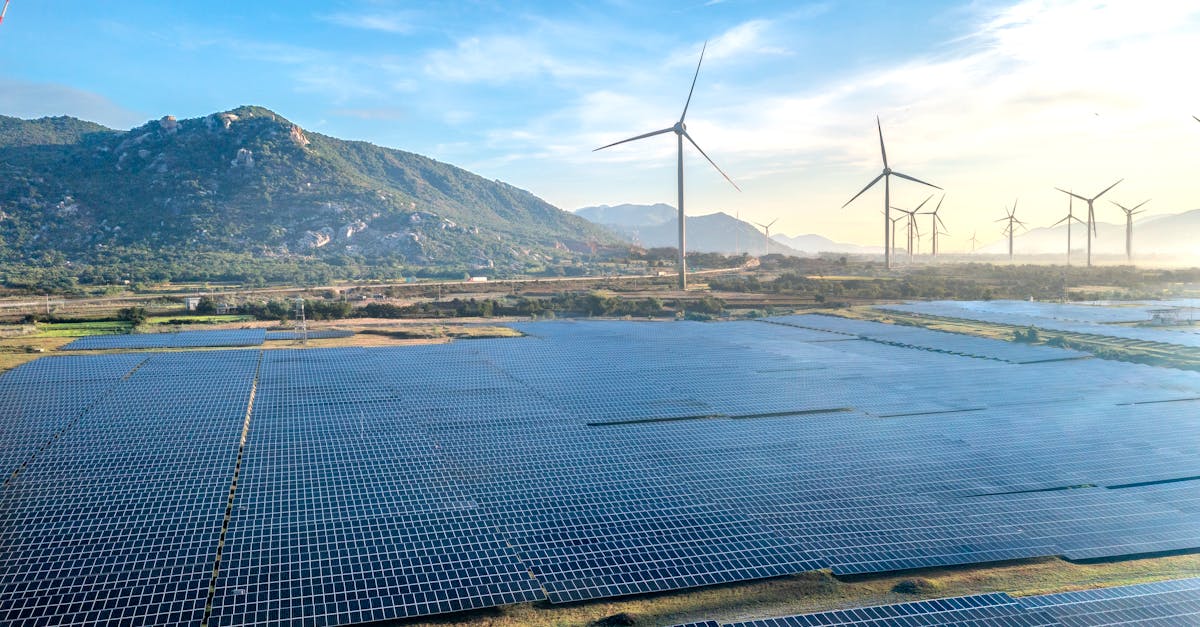
Photo by Quang Nguyen Vinh on Pexels
The energy sector manages $2.8 trillion in annual global revenue with infrastructure that runs 24/7/365. AI agents are transforming every layer—from real-time grid balancing to energy trading, renewable optimization, and carbon accounting. A single grid management agent can prevent blackouts affecting millions while saving utilities $15-40M annually.
This guide covers six production workflows where AI agents deliver measurable results in energy, with architecture patterns, code examples, and ROI calculations.
Table of Contents
1. Real-Time Grid Management & Load Balancing
Modern grids juggle variable renewable generation, bidirectional power flows from distributed energy resources (DERs), and demand fluctuations measured in milliseconds. An AI agent continuously monitors grid state and dispatches balancing actions before operators notice.
Architecture
The grid management agent ingests three data streams: SCADA telemetry (voltage, frequency, line loading), weather forecasts (solar irradiance, wind speed), and market signals (real-time pricing, demand response events). It maintains a digital twin of the grid topology and runs optimization at 15-second intervals.
import numpy as np
from dataclasses import dataclass
from typing import List, Optional

@dataclass
class GridState:
    frequency_hz: float        # Target: 50.00 or 60.00 Hz
    total_load_mw: float
    total_generation_mw: float
    renewable_pct: float
    line_loadings: dict        # line_id -> % capacity
    voltage_deviations: dict   # bus_id -> deviation from nominal

class GridBalancingAgent:
    """Real-time grid balancing with frequency regulation."""

    FREQUENCY_DEADBAND = 0.02   # Hz
    LINE_OVERLOAD_THRESHOLD = 0.85
    VOLTAGE_DEVIATION_MAX = 0.05  # 5% of nominal

    def __init__(self, grid_model, dispatch_api):
        self.grid = grid_model
        self.dispatch = dispatch_api
        self.nominal_freq = 60.0  # Hz (US) or 50.0 (EU)

    def assess_grid_state(self, state: GridState) -> dict:
        """Evaluate grid health and identify issues."""
        issues = []

        # Frequency deviation
        freq_dev = abs(state.frequency_hz - self.nominal_freq)
        if freq_dev > self.FREQUENCY_DEADBAND:
            severity = "critical" if freq_dev > 0.5 else "warning"
            direction = "under" if state.frequency_hz < self.nominal_freq else "over"
            issues.append({
                "type": "frequency",
                "severity": severity,
                "deviation_hz": freq_dev,
                "direction": direction,
                "required_mw": freq_dev * 500  # Droop response estimate
            })

        # Generation-load imbalance
        imbalance_mw = state.total_generation_mw - state.total_load_mw
        if abs(imbalance_mw) > state.total_load_mw * 0.02:
            issues.append({
                "type": "imbalance",
                "severity": "warning",
                "imbalance_mw": imbalance_mw,
                "action": "curtail" if imbalance_mw > 0 else "dispatch"
            })

        # Line overloads
        for line_id, loading in state.line_loadings.items():
            if loading > self.LINE_OVERLOAD_THRESHOLD:
                issues.append({
                    "type": "line_overload",
                    "severity": "critical" if loading > 0.95 else "warning",
                    "line_id": line_id,
                    "loading_pct": loading
                })

        return {"issues": issues, "healthy": len(issues) == 0}

    def dispatch_balancing_actions(self, assessment: dict) -> List[dict]:
        """Generate and execute balancing commands."""
        actions = []
        for issue in assessment["issues"]:
            if issue["type"] == "frequency" and issue["direction"] == "under":
                # Under-frequency: dispatch fast-response assets
                actions.extend(self._dispatch_frequency_response(
                    required_mw=issue["required_mw"]
                ))
            elif issue["type"] == "line_overload":
                # Redispatch generation to relieve congestion
                actions.extend(self._relieve_congestion(
                    line_id=issue["line_id"],
                    loading=issue["loading_pct"]
                ))
        return actions

    def _dispatch_frequency_response(self, required_mw: float) -> List[dict]:
        """Dispatch in merit order: batteries -> gas peakers -> demand response."""
        dispatched = 0
        actions = []
        # 1. Battery storage (fastest: <100ms response)
        for battery in self.grid.get_available_batteries():
            if dispatched >= required_mw:
                break
            output = min(battery.available_mw, required_mw - dispatched)
            actions.append({
                "asset": battery.id,
                "type": "battery_discharge",
                "mw": output,
                "response_time_ms": 50
            })
            dispatched += output

        # 2. Gas peakers (seconds)
        if dispatched < required_mw:
            for peaker in self.grid.get_available_peakers():
                if dispatched >= required_mw:
                    break
                output = min(peaker.ramp_rate_mw, required_mw - dispatched)
                actions.append({
                    "asset": peaker.id,
                    "type": "gas_dispatch",
                    "mw": output,
                    "response_time_ms": 5000
                })
                dispatched += output

        # 3. Demand response (minutes)
        if dispatched < required_mw:
            dr_mw = required_mw - dispatched
            actions.append({
                "type": "demand_response",
                "mw": dr_mw,
                "program": "emergency_curtailment"
            })

return actionsTopology-Aware Load Shedding
When generation shortfalls exceed available reserves, the agent must perform intelligent load shedding. Rather than blanket rolling blackouts, it uses grid topology to isolate non-critical feeders while protecting hospitals, water treatment, and emergency services.
class IntelligentLoadShedding:
    """Priority-based load shedding using grid topology."""

    PRIORITY_TIERS = {
        1: ["hospital", "water_treatment", "emergency_services", "telecom"],
        2: ["residential_heating", "food_storage", "public_transit"],
        3: ["commercial_hvac", "industrial_non_critical"],
        4: ["ev_charging", "pool_pumps", "discretionary_industrial"]
    }

    def calculate_shedding_plan(self, deficit_mw: float, feeders: list) -> list:
        """Shed load starting from lowest priority tier."""
        plan = []
        remaining = deficit_mw

        for tier in sorted(self.PRIORITY_TIERS.keys(), reverse=True):
            if remaining <= 0:
                break
            eligible = [f for f in feeders
                       if f.category in self.PRIORITY_TIERS[tier]]
            for feeder in sorted(eligible, key=lambda f: f.load_mw):
                if remaining <= 0:
                    break
                plan.append({
                    "feeder_id": feeder.id,
                    "action": "shed",
                    "load_mw": feeder.load_mw,
                    "tier": tier,
                    "affected_customers": feeder.customer_count,
                    "estimated_restore_time": "30-60 min"
                })
                remaining -= feeder.load_mw

        return plan
2. Energy Trading & Price Forecasting
Energy markets clear every 5 minutes in real-time and every hour in day-ahead. An AI trading agent analyzes weather forecasts, grid conditions, fuel prices, and historical patterns to optimize bidding strategies across multiple markets.
Multi-Market Trading Agent
from datetime import datetime, timedelta
import pandas as pd

class EnergyTradingAgent:
    """Automated energy trading across day-ahead and real-time markets."""

    def __init__(self, forecaster, portfolio, risk_limits):
        self.forecaster = forecaster
        self.portfolio = portfolio
        self.risk_limits = risk_limits

    def generate_day_ahead_bids(self, delivery_date: str) -> list:
        """Generate hourly bid curves for day-ahead market."""
        # Forecast prices for each hour
        price_forecast = self.forecaster.predict_hourly_prices(
            date=delivery_date,
            features=["weather", "load_forecast", "gas_price",
                      "renewable_generation", "outage_schedule"]
        )

        bids = []
        for hour in range(24):
            predicted_price = price_forecast[hour]
            confidence = price_forecast.confidence[hour]

            # Portfolio costs for each asset
            for asset in self.portfolio.dispatchable_assets:
                marginal_cost = asset.marginal_cost(hour)
                if marginal_cost < predicted_price["p50"]:
                    # Profitable to generate
                    bid_price = marginal_cost * 1.05  # 5% margin
                    bid_mw = asset.available_capacity(hour)

                    # Risk adjustment based on confidence
                    if confidence < 0.7:
                        bid_mw *= 0.8  # Reduce exposure

                    bids.append({
                        "hour": hour,
                        "asset": asset.id,
                        "bid_price_mwh": round(bid_price, 2),
                        "bid_quantity_mw": round(bid_mw, 1),
                        "predicted_price": predicted_price["p50"],
                        "expected_profit": (predicted_price["p50"] - marginal_cost) * bid_mw
                    })

            # Storage arbitrage: charge low, discharge high
            if predicted_price["p50"] < price_forecast.daily_mean * 0.7:
                bids.append({
                    "hour": hour,
                    "asset": "battery_fleet",
                    "bid_price_mwh": predicted_price["p50"] * 0.95,
                    "bid_quantity_mw": -self.portfolio.storage_capacity * 0.5,
                    "action": "charge"
                })
            elif predicted_price["p50"] > price_forecast.daily_mean * 1.3:
                bids.append({
                    "hour": hour,
                    "asset": "battery_fleet",
                    "bid_price_mwh": predicted_price["p50"] * 1.05,
                    "bid_quantity_mw": self.portfolio.storage_capacity * 0.5,
                    "action": "discharge"
                })

        # Validate against risk limits
        total_exposure = sum(b["bid_quantity_mw"] * b["bid_price_mwh"]
                           for b in bids if b.get("bid_quantity_mw", 0) > 0)
        if total_exposure > self.risk_limits.max_daily_exposure:
            bids = self._scale_to_risk_limit(bids)

        return bids

    def real_time_adjustment(self, market_state: dict) -> list:
        """Adjust positions in 5-minute real-time market."""
        actual_price = market_state["current_lmp"]
        da_position = market_state["day_ahead_position"]

        adjustments = []
        # If real-time price significantly above day-ahead
        if actual_price > da_position["price"] * 1.2:
            # Dispatch additional capacity
            for asset in self.portfolio.get_quick_start_assets():
                if asset.marginal_cost < actual_price * 0.9:
                    adjustments.append({
                        "asset": asset.id,
                        "action": "increment",
                        "mw": asset.available_ramp,
                        "expected_revenue": (actual_price - asset.marginal_cost) * asset.available_ramp / 12
                    })

return adjustments3. Demand Forecasting & Peak Shaving
Demand forecasting drives everything from generation scheduling to capacity planning. AI agents combine weather data, calendar effects, economic indicators, and real-time smart meter feeds to predict load at 15-minute granularity.
Hierarchical Demand Forecasting
class DemandForecastAgent:
    """Multi-horizon demand forecasting with peak detection."""

    def __init__(self, model_registry):
        self.models = model_registry
        # Different models for different horizons
        self.horizon_models = {
            "15min": "gradient_boost_realtime",   # 15-min ahead
            "hourly": "transformer_hourly",        # 24h ahead
            "daily": "ensemble_daily",             # 7 days ahead
            "seasonal": "lstm_seasonal"            # 90 days ahead
        }

    def forecast(self, horizon: str, resolution_min: int = 15) -> dict:
        """Generate demand forecast with uncertainty bands."""
        model = self.models.get(self.horizon_models[horizon])

        features = self._build_features(horizon)
        prediction = model.predict(features)

        return {
            "horizon": horizon,
            "timestamps": prediction.timestamps,
            "load_mw": prediction.values,
            "upper_bound": prediction.values * 1.05,  # 95th percentile
            "lower_bound": prediction.values * 0.95,
            "peak_hour": prediction.timestamps[prediction.values.argmax()],
            "peak_mw": float(prediction.values.max()),
            "confidence": prediction.confidence
        }

    def detect_peak_events(self, forecast: dict) -> list:
        """Identify upcoming demand peaks for shaving."""
        events = []
        threshold = self._get_peak_threshold()  # e.g., 90th percentile

        for i, (ts, load) in enumerate(zip(forecast["timestamps"], forecast["load_mw"])):
            if load > threshold:
                events.append({
                    "timestamp": ts,
                    "predicted_load_mw": float(load),
                    "excess_mw": float(load - threshold),
                    "shaving_options": self._get_shaving_options(float(load - threshold), ts)
                })

        return events

    def _get_shaving_options(self, target_mw: float, timestamp) -> list:
        """Rank peak-shaving strategies by cost-effectiveness."""
        options = [
            {"strategy": "battery_discharge", "available_mw": 50,
             "cost_per_mwh": 15, "response_min": 0.1},
            {"strategy": "hvac_precooling", "available_mw": 30,
             "cost_per_mwh": 5, "response_min": 60},
            {"strategy": "ev_charging_defer", "available_mw": 20,
             "cost_per_mwh": 2, "response_min": 15},
            {"strategy": "industrial_curtailment", "available_mw": 100,
             "cost_per_mwh": 45, "response_min": 30},
        ]
        return sorted(options, key=lambda x: x["cost_per_mwh"])
Peak demand charges account for 30-50% of commercial electricity bills. An AI agent that shaves just 10% off peak demand saves large commercial customers $50-200K/year.
4. Renewable Energy Optimization
Renewable assets—solar farms, wind parks, and distributed rooftop PV—produce variable output that depends on weather. AI agents maximize renewable harvest while minimizing curtailment and grid impact.
Solar + Storage Optimization
class RenewableOptimizationAgent:
    """Optimize renewable generation, curtailment, and storage."""

    def optimize_solar_storage(self, solar_farm, battery, forecast) -> dict:
        """Co-optimize solar generation with battery storage."""
        schedule = []
        battery_soc = battery.current_soc  # State of charge (%)

        for hour in range(24):
            solar_mw = forecast["solar_generation"][hour]
            load_mw = forecast["local_load"][hour]
            grid_price = forecast["price"][hour]
            net = solar_mw - load_mw

            action = {"hour": hour, "solar_mw": solar_mw}

            if net > 0:  # Excess solar
                if grid_price < forecast["avg_price"] * 0.8 and battery_soc < 90:
                    # Low price: store for later
                    charge_mw = min(net, battery.max_charge_rate,
                                   (90 - battery_soc) / 100 * battery.capacity)
                    action["battery"] = "charge"
                    action["battery_mw"] = charge_mw
                    action["grid_export_mw"] = net - charge_mw
                    battery_soc += (charge_mw / battery.capacity) * 100
                else:
                    # High price: export to grid
                    action["grid_export_mw"] = net
                    action["revenue"] = net * grid_price

            elif net < 0:  # Load exceeds solar
                deficit = abs(net)
                if grid_price > forecast["avg_price"] * 1.2 and battery_soc > 20:
                    # High price: discharge battery
                    discharge_mw = min(deficit, battery.max_discharge_rate,
                                      (battery_soc - 20) / 100 * battery.capacity)
                    action["battery"] = "discharge"
                    action["battery_mw"] = discharge_mw
                    action["grid_import_mw"] = deficit - discharge_mw
                    action["savings"] = discharge_mw * grid_price
                    battery_soc -= (discharge_mw / battery.capacity) * 100
                else:
                    action["grid_import_mw"] = deficit

            action["battery_soc"] = round(battery_soc, 1)
            schedule.append(action)

        total_revenue = sum(s.get("revenue", 0) for s in schedule)
        total_savings = sum(s.get("savings", 0) for s in schedule)

        return {
            "schedule": schedule,
            "total_revenue": total_revenue,
            "total_savings": total_savings,
            "self_consumption_pct": self._calc_self_consumption(schedule),
            "curtailment_mwh": self._calc_curtailment(schedule)
        }
Wind Farm Wake Optimization
In large wind farms, upstream turbines create wake effects that reduce output of downstream turbines by 10-25%. AI agents dynamically yaw and derate upstream turbines to maximize total farm output.
class WindFarmAgent:
    """Optimize wind farm output considering wake effects."""

    def optimize_yaw_angles(self, wind_direction: float, wind_speed: float,
                            turbine_layout: list) -> dict:
        """Calculate optimal yaw offsets to reduce wake losses."""
        # Baseline: all turbines face directly into wind
        baseline_power = self._simulate_farm(turbine_layout, wind_direction,
                                             wind_speed, yaw_offsets=None)

        # Optimize upstream turbine yaw angles
        best_offsets = {}
        best_power = baseline_power

        for turbine in self._get_upstream_turbines(turbine_layout, wind_direction):
            for offset in range(-25, 26, 5):  # -25 to +25 degrees
                trial_offsets = {**best_offsets, turbine.id: offset}
                trial_power = self._simulate_farm(
                    turbine_layout, wind_direction, wind_speed,
                    yaw_offsets=trial_offsets
                )
                if trial_power > best_power:
                    best_power = trial_power
                    best_offsets[turbine.id] = offset

        improvement = (best_power - baseline_power) / baseline_power * 100

        return {
            "yaw_offsets": best_offsets,
            "baseline_mw": baseline_power,
            "optimized_mw": best_power,
            "improvement_pct": round(improvement, 1),
            "annual_value_estimate": improvement / 100 * baseline_power * 8760 * 40
            # $40/MWh average
}5. Carbon Tracking & ESG Compliance
Corporations face increasing pressure to report Scope 1, 2, and 3 emissions. AI agents automate carbon accounting, track real-time grid emission factors, and optimize operations for minimum carbon footprint.
Automated Carbon Accounting Agent
class CarbonTrackingAgent:
    """Automated carbon tracking and ESG reporting."""

    EMISSION_FACTORS = {
        # kg CO2e per MWh by source
        "coal": 1000, "gas_ccgt": 400, "gas_peaker": 550,
        "solar": 5, "wind": 7, "nuclear": 12, "hydro": 10
    }

    def calculate_realtime_intensity(self, grid_mix: dict) -> dict:
        """Calculate real-time carbon intensity of grid electricity."""
        total_generation = sum(grid_mix.values())
        weighted_intensity = sum(
            mw * self.EMISSION_FACTORS.get(source, 500)
            for source, mw in grid_mix.items()
        )

        intensity = weighted_intensity / total_generation if total_generation > 0 else 0

        return {
            "carbon_intensity_kg_mwh": round(intensity, 1),
            "grid_mix": grid_mix,
            "cleanest_source": min(grid_mix.keys(),
                                   key=lambda s: self.EMISSION_FACTORS.get(s, 999)),
            "recommendation": self._shifting_recommendation(intensity)
        }

    def optimize_for_carbon(self, flexible_loads: list, intensity_forecast: list) -> list:
        """Schedule flexible loads during low-carbon periods."""
        schedule = []
        for load in flexible_loads:
            # Find the lowest-carbon window for this load's duration
            best_start = 0
            best_avg_intensity = float('inf')

            for start in range(len(intensity_forecast) - load.duration_hours):
                window = intensity_forecast[start:start + load.duration_hours]
                avg = sum(w["intensity"] for w in window) / len(window)
                if avg < best_avg_intensity:
                    best_avg_intensity = avg
                    best_start = start

            schedule.append({
                "load": load.name,
                "optimal_start": intensity_forecast[best_start]["timestamp"],
                "duration_hours": load.duration_hours,
                "avg_carbon_intensity": round(best_avg_intensity, 1),
                "carbon_saved_kg": round(
                    (load.power_mw * load.duration_hours) *
                    (intensity_forecast[12]["intensity"] - best_avg_intensity), 1
                )
            })

        return schedule

    def generate_esg_report(self, period: str) -> dict:
        """Generate ESG-compliant emissions report."""
        return {
            "period": period,
            "scope_1": self._calculate_scope1(),   # Direct fuel combustion
            "scope_2": {
                "location_based": self._scope2_location(),  # Grid average
                "market_based": self._scope2_market()       # With RECs/PPAs
            },
            "scope_3": self._estimate_scope3(),     # Supply chain
            "total_tco2e": None,  # Filled after calculation
            "yoy_change_pct": None,
            "reduction_targets": self._get_sbti_targets(),
            "offset_credits": self._get_verified_offsets()
        }
Companies using AI-driven carbon optimization reduce Scope 2 emissions by 15-25% through smart load shifting alone—no capital investment in renewables needed.
6. Predictive Maintenance for Energy Assets
Energy assets—turbines, transformers, solar inverters, pipelines—operate in harsh conditions. Unplanned downtime costs $50-500K per event. AI agents analyze sensor data to predict failures days to weeks before they occur.
Transformer Health Agent
class TransformerHealthAgent:
    """Predictive maintenance for power transformers."""

    # Dissolved gas analysis (DGA) thresholds (IEEE C57.104-2019)
    DGA_THRESHOLDS = {
        "hydrogen_ppm": {"normal": 100, "caution": 700, "warning": 1800},
        "methane_ppm": {"normal": 120, "caution": 400, "warning": 1000},
        "ethylene_ppm": {"normal": 50, "caution": 200, "warning": 500},
        "acetylene_ppm": {"normal": 1, "caution": 35, "warning": 150},
    }

    def assess_transformer(self, telemetry: dict) -> dict:
        """Comprehensive transformer health assessment."""
        scores = {}

        # 1. Dissolved Gas Analysis
        dga_score = self._score_dga(telemetry["dga"])
        scores["dga"] = dga_score

        # 2. Oil temperature trending
        oil_temp_score = self._score_temperature_trend(
            telemetry["top_oil_temp_history"],
            telemetry["ambient_temp"],
            telemetry["load_pct"]
        )
        scores["thermal"] = oil_temp_score

        # 3. Moisture content
        moisture_score = self._score_moisture(
            telemetry["moisture_ppm"],
            telemetry["oil_temp_c"]
        )
        scores["moisture"] = moisture_score

        # 4. Load history stress
        load_score = self._score_load_stress(
            telemetry["load_history_24h"],
            telemetry["nameplate_mva"]
        )
        scores["load_stress"] = load_score

        # Composite health index (0-100)
        weights = {"dga": 0.4, "thermal": 0.25, "moisture": 0.2, "load_stress": 0.15}
        health_index = sum(scores[k] * weights[k] for k in weights)

        # Remaining useful life estimate
        rul_months = self._estimate_rul(health_index, scores)

        return {
            "health_index": round(health_index, 1),
            "component_scores": scores,
            "remaining_useful_life_months": rul_months,
            "risk_level": self._classify_risk(health_index),
            "recommended_actions": self._recommend_actions(scores, health_index),
            "next_assessment": self._schedule_next(health_index)
        }

    def _score_dga(self, dga: dict) -> float:
        """Score dissolved gas analysis results (100=healthy, 0=critical)."""
        worst_score = 100
        for gas, value in dga.items():
            thresholds = self.DGA_THRESHOLDS.get(gas)
            if not thresholds:
                continue
            if value > thresholds["warning"]:
                worst_score = min(worst_score, 20)
            elif value > thresholds["caution"]:
                worst_score = min(worst_score, 50)
            elif value > thresholds["normal"]:
                worst_score = min(worst_score, 75)
        return worst_score

    def _recommend_actions(self, scores: dict, health_index: float) -> list:
        """Generate prioritized maintenance recommendations."""
        actions = []
        if scores["dga"] < 50:
            actions.append({
                "priority": "high",
                "action": "Schedule DGA retest within 7 days",
                "rationale": "Elevated dissolved gases indicate possible internal fault"
            })
        if scores["thermal"] < 60:
            actions.append({
                "priority": "medium",
                "action": "Inspect cooling system (fans, radiators, oil pumps)",
                "rationale": "Temperature trending above expected for current load"
            })
        if scores["moisture"] < 50:
            actions.append({
                "priority": "high",
                "action": "Schedule oil processing or dryout",
                "rationale": "Moisture content approaching unsafe levels"
            })
        if health_index < 40:
            actions.append({
                "priority": "critical",
                "action": "Begin replacement planning",
                "rationale": f"Health index {health_index}/100 indicates end-of-life"
            })
return actionsPlatform Comparison
| Platform | Best For | Grid Integration | Trading | Pricing |
|---|---|---|---|---|
| AutoGrid | DER management, demand response | Excellent (DERMS) | Basic | Enterprise |
| Uplight | Customer energy management | Good | No | Enterprise |
| SparkCognition | Asset performance, predictive maintenance | Good | No | $100K+/yr |
| GridBeyond | Demand-side flexibility, trading | Good | Excellent | Revenue share |
| Custom (Python/Julia) | Full control, specific market rules | Build your own | Full | Dev time |
ROI Calculator
For a mid-size utility (2GW capacity, 500K customers):
| Workflow | Annual Savings | Implementation Cost | Payback |
|---|---|---|---|
| Grid balancing optimization | $15-40M | $2-5M | 2-4 months |
| Energy trading AI | $8-25M | $1-3M | 2-5 months |
| Demand forecasting + peak shaving | $5-15M | $500K-1.5M | 1-3 months |
| Renewable optimization | $3-10M | $500K-2M | 2-6 months |
| Predictive maintenance | $5-15M | $1-3M | 3-6 months |
| Carbon optimization | $2-8M (+ regulatory value) | $300K-1M | 2-5 months |
| Total | $38-113M/yr | $5.3-15.5M | 2-4 months |
Implementation Roadmap
Phase 1: Foundation (Months 1-3)
- Deploy demand forecasting agent (highest accuracy ROI)
- Integrate SCADA/EMS data pipelines
- Implement basic peak shaving with existing battery assets
- Set up carbon tracking dashboard
Phase 2: Optimization (Months 4-6)
- Launch energy trading agent in shadow mode (paper trading)
- Deploy predictive maintenance for critical transformers
- Implement renewable + storage co-optimization
- Go live with trading agent after validation
Phase 3: Advanced (Months 7-12)
- Real-time grid balancing with autonomous dispatch
- Wake optimization for wind farms
- Cross-market arbitrage strategies
- ESG reporting automation with Scope 3
Common Anti-Patterns
- Ignoring market rules: Each ISO/RTO has different bidding requirements—ERCOT vs PJM vs CAISO. Test with market-specific simulators before going live.
- Over-optimizing in backtesting: Energy prices have fat tails. Use walk-forward validation, not k-fold, and stress-test against 2021 Texas freeze scenarios.
- Skipping cybersecurity: Grid-connected agents are critical infrastructure. NERC CIP compliance is mandatory—not optional.
- No human override: Always maintain manual override for grid operations. AI makes recommendations; operators execute critical switching.
Build Your Energy AI Agent
Get our free AI Agent Starter Kit with templates, deployment guides, and security checklists for energy applications.
Download Starter KitAI Agents Weekly Newsletter
Stay updated on the latest in AI agents, automation, and energy tech. Free, 3x/week.
Subscribe Free