AI Agent vs Chatbot: What's the Real Difference?
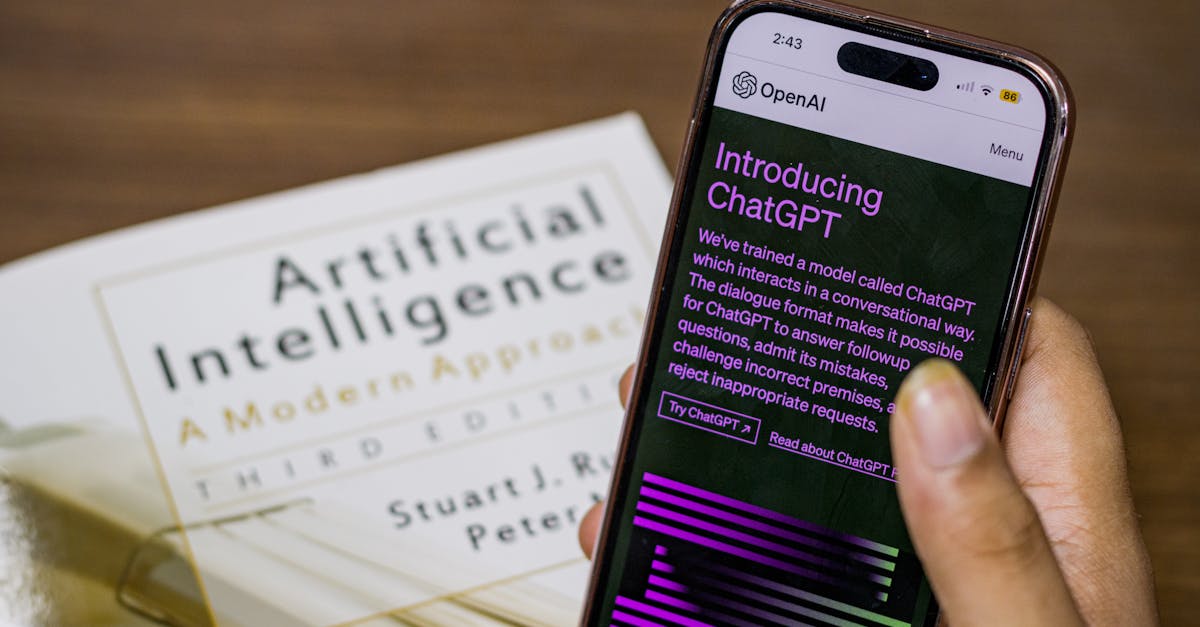
Photo by Sanket Mishra on Pexels
Everyone calls everything an "AI agent" now. Customer support bots, Siri, that thing that answers your FAQ — all suddenly "agents." But there's a real, meaningful difference between a chatbot and an AI agent, and understanding it matters if you're building, buying, or using either one.
Here's the short version: a chatbot responds. An AI agent acts. The long version is more nuanced — and more interesting.
The Quick Comparison
| Capability | Chatbot | AI Agent |
|---|---|---|
| Autonomy | Responds to prompts | Plans and acts independently |
| Memory | Session-based or none | Persistent, cross-session |
| Tool use | None or limited | APIs, databases, file systems |
| Decision-making | Rule-based / scripted | Reasoning + goal-oriented |
| Multi-step tasks | One exchange at a time | Chains actions across systems |
| Learning | Static until updated | Improves from interactions |
| Error handling | "I don't understand" | Retries, adapts, escalates |
1. Autonomy: React vs. Act
A chatbot waits for you to say something, then responds. It's reactive. Every interaction starts with you.
An AI agent can initiate work on its own. Give it a goal — "monitor our API for errors and fix them" — and it runs continuously. It decides what to do, when to do it, and how to recover when something breaks.
2. Memory: Goldfish vs. Elephant
Most chatbots have the memory of a goldfish. Each conversation starts fresh. Some newer ones maintain session context, but once you close the tab, it's gone.
AI agents maintain persistent memory across sessions. They remember what happened last week, what your preferences are, what worked and what didn't. This is what makes them compound over time — each interaction makes them more useful.
This isn't just a nice feature. Memory is what separates a tool you use from an assistant that knows you.
3. Tool Use: Talking vs. Doing
Chatbots talk. AI agents do.
A chatbot might tell you how to create a database backup. An AI agent runs the backup command, verifies the output, uploads it to S3, and logs the result. The difference is between giving advice and taking action.
Modern AI agents connect to:
- APIs — send emails, create tickets, update CRMs
- Databases — query, write, migrate
- File systems — read, write, organize files
- External services — Slack, GitHub, Stripe, anything with an API
- Other AI models — orchestrate specialized models for different subtasks
The Model Context Protocol (MCP) is making this even easier by standardizing how agents connect to tools — think of it as USB-C for AI integrations.
4. Decision-Making: Scripts vs. Reasoning
Traditional chatbots follow decision trees. If the user says X, respond with Y. Even "AI-powered" chatbots mostly pattern-match against predefined intents.
AI agents reason. They break down complex goals into subtasks, evaluate options, and make judgment calls. When something unexpected happens, they don't just say "I don't understand" — they adapt.
5. Error Handling: Crash vs. Recover
When a chatbot fails, it fails visibly: "Sorry, I didn't understand that. Can you rephrase?" End of the road.
When an AI agent fails, it retries with a different approach. API returned an error? Try a different endpoint. Model output was malformed? Parse it differently. Task too complex? Break it into smaller pieces. Still stuck? Escalate to a human with context about what was tried.
This resilience is what makes agents suitable for production workloads where chatbots would just break.
When to Use a Chatbot
Chatbots aren't dead. They're the right choice when:
- The task is simple and predictable — FAQ, basic support, order lookup
- You need instant deployment — chatbots are faster to set up
- Cost is the primary concern — chatbots are cheaper to run
- The stakes are low — wrong answer = minor inconvenience, not a disaster
- You want full control — scripted responses mean no surprises
When to Use an AI Agent
AI agents shine when:
- Tasks span multiple systems — "process this order" touches inventory, payments, shipping, and email
- Decisions require context — the right action depends on history, preferences, or business rules
- Work is ongoing, not one-shot — monitoring, maintenance, content pipelines
- You need reliability at scale — agents handle errors and edge cases autonomously
- The ROI justifies the complexity — agents cost more but deliver 40-60% automation vs. 20-30% for chatbots
If you're curious about real implementations, check out 12 real AI agent use cases that actually work in 2026.
The Spectrum, Not a Binary
In practice, the line between chatbot and agent is a spectrum:
- Rule-based chatbot — fixed scripts, no AI Low autonomy
- AI chatbot — LLM-powered responses, no tool use
- Assistive agent — LLM + some tools, human-in-the-loop
- Autonomous agent — full tool access, self-directed High autonomy
Most products marketed as "AI agents" today sit at level 2 or 3. True level-4 autonomous agents — the ones that run 24/7 without human intervention — are still early but becoming practical with frameworks like Claude Code and open-source agent frameworks.
The Business Case
| Metric | Chatbot | AI Agent |
|---|---|---|
| Setup cost | $500 – $5K | $5K – $50K+ |
| Monthly running cost | $50 – $500 | $200 – $5K |
| Typical ROI | 20-30% cost reduction | 40-60% automation |
| Time to value | Days to weeks | Weeks to months |
| Best for | Support deflection | End-to-end workflows |
The cost difference is shrinking fast. Open-source LLMs and tools like DeepSeek V3 make it possible to build useful agents for under $50/month in API costs. The real cost is engineering time, not compute.
What's Coming Next
The chatbot era is ending. Not because chatbots are bad, but because the technology that powers agents — better LLMs, tool use, memory, orchestration — is becoming cheap and accessible enough that there's less reason to settle for a scripted bot.
By late 2026, Gartner predicts 40% of enterprise applications will have task-specific AI agents embedded in them. The companies that figure out agents now will have a structural advantage.
The question isn't whether to adopt AI agents. It's whether you'll build them yourself or use someone else's.
Stay Ahead of the Curve
Get the latest on AI agents, frameworks, and real-world implementations — 3x/week, no fluff.
Subscribe to AI Agents Weekly →