AI Agent for Logistics: Automate Route Optimization, Warehouse Management & Last-Mile Delivery (2026)
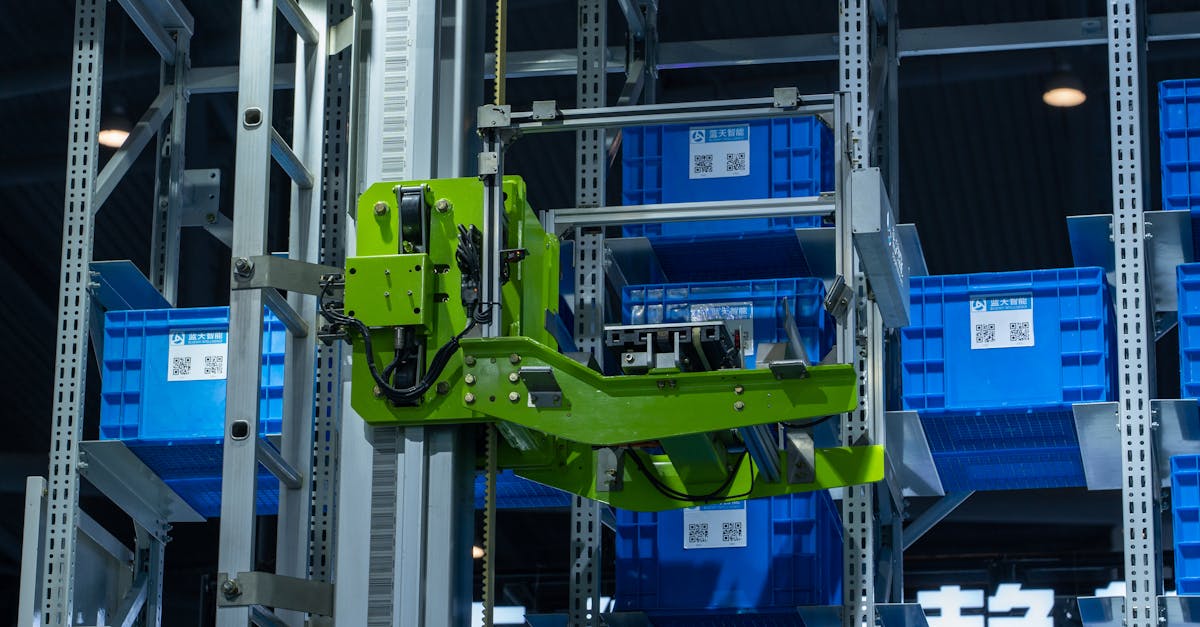
Photo by Peter Xie on Pexels
Logistics costs represent 8-12% of GDP in most economies. The industry moves $10+ trillion in goods annually, yet most operations still rely on manual dispatch, static routes, and reactive problem-solving. AI agents are transforming logistics from a cost center into a competitive advantage — automating decisions that humans make thousands of times per day.
This guide covers six production-ready AI agent workflows for logistics, with architecture details, code examples, and real ROI numbers from companies that have deployed them.
What You'll Learn
1. Dynamic Route Optimization
Static routes waste 15-25% of fuel and driver time. An AI agent continuously re-optimizes routes based on real-time traffic, delivery windows, vehicle capacity, and driver hours-of-service regulations.
The VRPTW Problem
Vehicle Routing with Time Windows (VRPTW) is NP-hard — exact solutions don't scale beyond ~25 stops. AI agents use metaheuristics (genetic algorithms, simulated annealing) or learned heuristics (attention-based neural networks) to find near-optimal solutions in seconds.
import numpy as np
from dataclasses import dataclass
from typing import List

@dataclass
class Stop:
    id: str
    lat: float
    lng: float
    window_start: int  # minutes from midnight
    window_end: int
    service_time: int  # minutes
    demand_kg: float

class RouteOptimizationAgent:
    def __init__(self, traffic_api, fleet_db, constraint_engine):
        self.traffic = traffic_api
        self.fleet = fleet_db
        self.constraints = constraint_engine

    async def optimize_routes(self, stops: List[Stop], vehicles, depot):
        # Get real-time traffic matrix
        locations = [depot] + [(s.lat, s.lng) for s in stops]
        travel_times = await self.traffic.get_matrix(locations)

        # Build constraint model
        model = self.constraints.build(
            stops=stops,
            vehicles=vehicles,
            travel_times=travel_times,
            depot=depot
        )

        # Add hard constraints
        model.add_capacity_constraints()
        model.add_time_window_constraints()
        model.add_hos_constraints(max_drive_hours=11, max_duty_hours=14)
        model.add_break_constraints(break_after_hours=8, break_duration=30)

        # Solve with hybrid approach
        # 1. Initial solution via nearest-neighbor heuristic
        initial = self._nearest_neighbor(stops, vehicles, travel_times)

        # 2. Improve via adaptive large neighborhood search
        best = self._alns_optimize(
            initial, model,
            iterations=10000,
            operators=["relocate", "swap", "2-opt", "cross-exchange"]
        )

        # 3. Real-time adjustments
        routes = self._build_route_plans(best, travel_times)

        return {
            "routes": routes,
            "total_distance_km": sum(r["distance_km"] for r in routes),
            "total_time_hours": sum(r["time_hours"] for r in routes),
            "vehicles_used": len(routes),
            "unserved_stops": best.get("unserved", []),
            "savings_vs_static": self._compare_static(routes, stops)
        }

    async def reoptimize_live(self, active_routes, new_event):
        """Handle real-time disruptions: traffic, cancellations, new orders."""
        if new_event["type"] == "traffic_delay":
            affected = self._find_affected_routes(active_routes, new_event)
            for route in affected:
                remaining = route["stops"][route["current_index"]:]
                reoptimized = await self.optimize_routes(
                    remaining, [route["vehicle"]], route["current_location"]
                )
                route["stops"] = route["stops"][:route["current_index"]] + \
                                 reoptimized["routes"][0]["stops"]

        elif new_event["type"] == "new_order":
            # Find best insertion point across all active routes
            best_route, best_pos, best_cost = None, None, float("inf")
            for route in active_routes:
                pos, cost = self._cheapest_insertion(
                    route, new_event["stop"]
                )
                if cost < best_cost and self._feasible(route, pos, new_event["stop"]):
                    best_route, best_pos, best_cost = route, pos, cost

            if best_route:
                best_route["stops"].insert(best_pos, new_event["stop"])
                return {"inserted": True, "route": best_route["id"],
                        "additional_cost": best_cost}
return {"inserted": False, "reason": "No feasible insertion"}2. Warehouse Management Automation
A warehouse is a system of thousands of decisions per hour: where to put incoming inventory, which orders to pick next, how to batch picks for efficiency, when to replenish forward pick locations. AI agents make these decisions faster and better than manual processes.
Slotting Optimization
Product placement directly impacts pick efficiency. An AI agent analyzes order frequency, product affinity (items often ordered together), physical dimensions, and pick path geometry to determine optimal slot assignments.
class WarehouseAgent:
    def __init__(self, wms_client, order_history, layout_engine):
        self.wms = wms_client
        self.orders = order_history
        self.layout = layout_engine

    async def optimize_slotting(self, warehouse_id):
        # Analyze 90-day order patterns
        frequency = await self.orders.get_sku_frequency(
            warehouse_id, days=90
        )
        affinity = await self.orders.get_cooccurrence_matrix(
            warehouse_id, days=90
        )

        # Current layout and constraints
        layout = await self.layout.get_zones(warehouse_id)
        slots = await self.wms.get_all_slots(warehouse_id)

        # ABC classification with velocity weighting
        skus_sorted = sorted(
            frequency.items(), key=lambda x: x[1], reverse=True
        )
        total_picks = sum(f for _, f in skus_sorted)

        a_skus = []  # Top 20% of picks
        b_skus = []  # Next 30%
        c_skus = []  # Bottom 50%
        cumulative = 0
        for sku, picks in skus_sorted:
            cumulative += picks
            pct = cumulative / total_picks
            if pct <= 0.80:
                a_skus.append(sku)
            elif pct <= 0.95:
                b_skus.append(sku)
            else:
                c_skus.append(sku)

        # Assign A-SKUs to golden zone (waist-height, near dock)
        assignments = {}
        golden_slots = self.layout.get_golden_zone_slots(warehouse_id)

        # Sort A-SKUs by affinity clusters
        clusters = self._cluster_by_affinity(a_skus, affinity)
        for cluster in clusters:
            nearby_slots = self._find_adjacent_slots(golden_slots, len(cluster))
            for sku, slot in zip(cluster, nearby_slots):
                assignments[sku] = slot
                golden_slots.remove(slot)

        return {
            "reassignments": assignments,
            "estimated_pick_time_reduction": "18-25%",
            "estimated_travel_reduction": "30-40%",
            "implementation_waves": self._plan_migration(assignments)
        }

    async def optimize_pick_batching(self, pending_orders):
        """Group orders into efficient pick waves."""
        # Calculate proximity score for each order pair
        scores = {}
        for i, order_a in enumerate(pending_orders):
            for j, order_b in enumerate(pending_orders[i+1:], i+1):
                zone_overlap = self._zone_overlap(order_a, order_b)
                aisle_proximity = self._aisle_proximity(order_a, order_b)
                scores[(i, j)] = zone_overlap * 0.6 + aisle_proximity * 0.4

        # Greedy batch formation
        batches = []
        unassigned = set(range(len(pending_orders)))
        batch_size = 12  # picks per batch

        while unassigned:
            seed = min(unassigned)
            batch = [seed]
            unassigned.remove(seed)

            while len(batch) < batch_size and unassigned:
                best_add = max(
                    unassigned,
                    key=lambda x: sum(scores.get(tuple(sorted([x, b])), 0)
                                      for b in batch)
                )
                batch.append(best_add)
                unassigned.remove(best_add)

            batches.append({
                "orders": [pending_orders[i] for i in batch],
                "estimated_picks": sum(len(pending_orders[i]["items"]) for i in batch),
                "pick_path": self._optimize_path(batch)
            })

return batches3. Last-Mile Delivery Intelligence
Last-mile delivery is the most expensive segment — 53% of total shipping cost. An AI agent optimizes the entire last-mile operation: delivery time prediction, driver assignment, customer communication, and failed delivery prevention.
Delivery Time Prediction
class LastMileAgent:
    def __init__(self, routing_engine, customer_db, driver_pool):
        self.routing = routing_engine
        self.customers = customer_db
        self.drivers = driver_pool

    async def predict_delivery_window(self, order_id):
        order = await self.customers.get_order(order_id)
        route = await self.routing.get_active_route(order["route_id"])
        driver = await self.drivers.get_status(route["driver_id"])

        # Current position and remaining stops
        remaining_stops = route["stops"][route["current_index"]:]
        order_position = next(
            i for i, s in enumerate(remaining_stops)
            if s["order_id"] == order_id
        )

        # Factor in real-time conditions
        traffic_delay = await self.routing.get_traffic_delay(
            driver["current_location"],
            remaining_stops[order_position]["location"]
        )

        # Historical delivery time for this address
        address_history = await self.customers.get_delivery_history(
            order["address"]
        )
        parking_time = address_history.get("avg_parking_time", 3)
        access_time = address_history.get("avg_access_time", 2)

        base_eta = route["planned_etas"][route["current_index"] + order_position]
        adjusted_eta = base_eta + traffic_delay + parking_time + access_time

        # Add buffer based on confidence
        stops_away = order_position
        buffer = stops_away * 2.5  # More uncertainty for distant stops

        return {
            "estimated_arrival": adjusted_eta,
            "window_start": adjusted_eta - buffer,
            "window_end": adjusted_eta + buffer,
            "stops_away": stops_away,
            "confidence": max(0.6, 1.0 - stops_away * 0.05)
        }

    async def prevent_failed_delivery(self, order_id):
        """Proactive failed delivery prevention."""
        order = await self.customers.get_order(order_id)
        risk_score = 0

        # Check delivery history
        history = await self.customers.get_delivery_history(order["address"])
        if history.get("failed_attempts", 0) > 0:
            risk_score += 30
            risk_score += history["failed_attempts"] * 10

        # Check if customer confirmed availability
        if not order.get("availability_confirmed"):
            risk_score += 20

        # Check access requirements
        if order.get("requires_signature") and not order.get("safe_place"):
            risk_score += 15

        # Weather impact
        weather = await self.routing.get_weather(order["address"])
        if weather.get("severe"):
            risk_score += 25

        if risk_score > 50:
            # Trigger proactive customer contact
            return {
                "risk": "high",
                "score": risk_score,
                "recommended_actions": [
                    "Send SMS with ETA and request confirmation",
                    "Offer alternative delivery time/location",
                    "Pre-authorize safe place delivery"
                ]
            }

        return {"risk": "low", "score": risk_score}
Customer communication: The agent sends contextual updates — not generic "out for delivery" messages, but specific ETAs that update dynamically. "Your package is 3 stops away, arriving in approximately 18 minutes." This reduces "where is my package" calls by 40-60%.
4. Fleet Management & Predictive Maintenance
Unplanned vehicle breakdowns cost $400-750 per incident (tow + repair + delayed deliveries + customer compensation). An AI agent monitors vehicle telematics to predict failures days before they happen.
class FleetMaintenanceAgent:
    def __init__(self, telematics_api, maintenance_db, parts_inventory):
        self.telematics = telematics_api
        self.maintenance = maintenance_db
        self.parts = parts_inventory

    async def assess_vehicle_health(self, vehicle_id):
        # Pull real-time telematics
        data = await self.telematics.get_vehicle_data(vehicle_id)

        health_scores = {}

        # Engine health (oil pressure, coolant temp, RPM patterns)
        engine = self._assess_engine(data)
        health_scores["engine"] = engine

        # Brake system (pad wear sensor, brake temp patterns)
        brakes = self._assess_brakes(data)
        health_scores["brakes"] = brakes

        # Tire condition (pressure trends, temperature differentials)
        tires = self._assess_tires(data)
        health_scores["tires"] = tires

        # Transmission (shift patterns, fluid temperature)
        transmission = self._assess_transmission(data)
        health_scores["transmission"] = transmission

        # Battery (voltage trends, cranking performance)
        battery = self._assess_battery(data)
        health_scores["battery"] = battery

        # Predict failures
        predictions = []
        for system, score in health_scores.items():
            if score["health"] < 0.7:
                prediction = self._predict_failure(
                    vehicle_id, system, score, data
                )
                predictions.append(prediction)

        # Schedule proactive maintenance
        if predictions:
            work_orders = self._create_work_orders(
                vehicle_id, predictions, await self.parts.check_availability()
            )
            return {
                "overall_health": min(s["health"] for s in health_scores.values()),
                "predictions": predictions,
                "work_orders": work_orders,
                "urgency": max(p["urgency"] for p in predictions)
            }

        return {
            "overall_health": min(s["health"] for s in health_scores.values()),
            "predictions": [],
            "next_scheduled": await self.maintenance.get_next(vehicle_id)
        }

    def _assess_brakes(self, data):
        pad_wear = data.get("brake_pad_remaining_pct", 100)
        temp_anomaly = self._detect_temp_anomaly(data["brake_temps"])

        if pad_wear < 15 or temp_anomaly:
            return {
                "health": pad_wear / 100,
                "issues": ["Low brake pad" if pad_wear < 15 else "Temperature anomaly"],
                "estimated_remaining_km": pad_wear * 500
            }
return {"health": pad_wear / 100, "issues": []}5. Demand Forecasting & Capacity Planning
Having too many trucks is expensive. Having too few means missed deliveries and lost customers. An AI agent forecasts demand at the route level and time-slot level to optimize fleet capacity.
Multi-Level Forecasting
- Strategic (monthly) — Fleet size decisions, depot location planning, contract negotiations
- Tactical (weekly) — Temp driver scheduling, cross-dock capacity allocation
- Operational (daily) — Route count, vehicle type mix, driver shift planning
class DemandForecastAgent:
    def __init__(self, order_db, external_data, capacity_model):
        self.orders = order_db
        self.external = external_data
        self.capacity = capacity_model

    async def forecast_capacity_needs(self, region, horizon_days=14):
        # Historical demand patterns
        history = await self.orders.get_daily_volumes(
            region, days_back=365
        )

        # External signals
        events = await self.external.get_upcoming_events(region, horizon_days)
        weather = await self.external.get_weather_forecast(region, horizon_days)
        promotions = await self.external.get_planned_promotions(horizon_days)

        # Base forecast (Prophet or similar)
        base = self._prophet_forecast(history, horizon_days)

        # Adjust for known events
        adjusted = base.copy()
        for day in range(horizon_days):
            multiplier = 1.0
            if events[day]:
                multiplier *= 1.0 + events[day]["volume_impact"]
            if promotions[day]:
                multiplier *= 1.0 + promotions[day]["expected_lift"]
            if weather[day].get("severe"):
                multiplier *= 0.85  # Severe weather reduces demand
            adjusted[day] *= multiplier

        # Convert volume to capacity needs
        capacity_plan = []
        for day, volume in enumerate(adjusted):
            stops = volume
            vehicles_needed = self._calc_vehicles(stops, region)
            drivers_needed = vehicles_needed * 1.1  # 10% buffer

            current_capacity = await self.capacity.get_available(
                region, day
            )
            gap = vehicles_needed - current_capacity["vehicles"]

            capacity_plan.append({
                "date": self._date_offset(day),
                "forecasted_volume": int(volume),
                "vehicles_needed": int(vehicles_needed),
                "drivers_needed": int(drivers_needed),
                "current_capacity": current_capacity["vehicles"],
                "gap": max(0, int(gap)),
                "action": "hire_temp" if gap > 3 else "ok" if gap <= 0 else "reassign"
            })

        return capacity_plan
6. Returns Processing & Reverse Logistics
Returns cost retailers $816 billion globally. The reverse logistics pipeline is typically 2-3x more expensive per item than forward logistics. An AI agent automates return authorization, routing decisions, and disposition (refurbish, resell, recycle, or dispose).
class ReturnsAgent:
    def __init__(self, product_db, customer_db, routing_engine):
        self.products = product_db
        self.customers = customer_db
        self.routing = routing_engine

    async def process_return(self, return_request):
        product = await self.products.get(return_request["product_id"])
        customer = await self.customers.get(return_request["customer_id"])

        # Fraud detection
        fraud_score = self._assess_return_fraud(return_request, customer)
        if fraud_score > 0.8:
            return {"approved": False, "reason": "manual_review",
                    "fraud_score": fraud_score}

        # Instant authorization for low-risk returns
        if fraud_score < 0.3 and product["price"] < 50:
            refund = self._process_instant_refund(return_request)

        # Determine optimal disposition
        disposition = self._determine_disposition(product, return_request)

        # Route to optimal facility
        facility = await self._find_optimal_facility(
            return_request["location"],
            disposition["action"]
        )

        return {
            "approved": True,
            "return_label": await self._generate_label(
                return_request["location"], facility
            ),
            "disposition": disposition,
            "facility": facility,
            "estimated_processing_days": disposition["processing_days"],
            "refund_timing": "instant" if fraud_score < 0.3 else "on_receipt"
        }

    def _determine_disposition(self, product, return_request):
        reason = return_request["reason"]
        condition = return_request.get("condition", "unknown")

        if reason == "defective":
            if product["warranty_active"]:
                return {"action": "warranty_replace", "processing_days": 3}
            return {"action": "refurbish_or_recycle", "processing_days": 5}

        if condition == "unopened":
            return {"action": "restock", "processing_days": 1,
                    "recovery_rate": 0.95}

        if condition == "like_new" and product["resale_value"] > product["price"] * 0.5:
            return {"action": "refurbish_resell", "processing_days": 3,
                    "recovery_rate": 0.60}

        if product["recyclable"]:
            return {"action": "recycle", "processing_days": 7,
                    "recovery_rate": 0.10}

        return {"action": "dispose", "processing_days": 2,
"recovery_rate": 0.0}Platform Comparison
| Platform | Focus | Fleet Size | Pricing | Key Features |
|---|---|---|---|---|
| Optaplanner / Timefold | Route optimization | Any | Open source / Commercial | VRPTW solver, Java-based |
| Route4Me | Route planning | 10-500 | $149-499/mo | Multi-stop routing, tracking |
| Onfleet | Last-mile | 10-1000 | $500-2000/mo | Driver app, auto-dispatch, analytics |
| Locus.sh | Full logistics | 50+ | Custom | Route optimization, analytics, integrations |
| FarEye | Enterprise logistics | 100+ | Custom | Visibility, orchestration, last-mile |
| Custom (OR-Tools) | Full flexibility | Any | Development cost | Google's open-source optimization |
ROI Calculator: Mid-Size Logistics Operation (200 Vehicles)
| Benefit | Annual Savings |
|---|---|
| Route optimization (15% distance reduction) | $450,000-720,000 |
| Warehouse pick efficiency (+30%) | $180,000-300,000 |
| Predictive maintenance (40% fewer breakdowns) | $200,000-400,000 |
| Failed delivery prevention (50% reduction) | $120,000-200,000 |
| Better capacity planning (10% utilization gain) | $300,000-500,000 |
| Returns optimization (20% more value recovery) | $150,000-250,000 |
| Total annual benefit | $1.4M-2.37M |
| Platform + integration costs | -$200,000-400,000 |
| Net annual ROI | $1.0M-1.97M |
Getting Started
Phase 1: Route optimization (Week 1-2)
- Implement basic VRPTW solver using Google OR-Tools (free, open-source)
- Integrate real-time traffic data via Google Maps or HERE API
- A/B test AI routes vs manual planning on 10% of fleet
Phase 2: Warehouse intelligence (Week 3-4)
- Analyze 90 days of order data for ABC slotting
- Implement pick batching algorithm
- Deploy wave planning optimization
Phase 3: Predictive systems (Month 2-3)
- Connect vehicle telematics (Samsara, Geotab, or OEM APIs)
- Build failure prediction models on historical maintenance data
- Implement demand forecasting with Prophet
Common Mistakes
- Optimizing routes without driver input — Drivers know local conditions AI doesn't. Build feedback loops
- Over-constraining the solver — Too many hard constraints = no feasible solution. Use soft constraints with penalties
- Ignoring data quality — Wrong addresses, outdated time windows, and missing constraints cause more problems than suboptimal algorithms
- Big-bang deployment — Roll out zone by zone, not fleet-wide. Fix integration issues at small scale
Build Your Logistics AI Agent
Our AI Agent Playbook includes templates for route optimization, warehouse automation, and fleet management agents with production-ready code.
Get the Playbook — $19